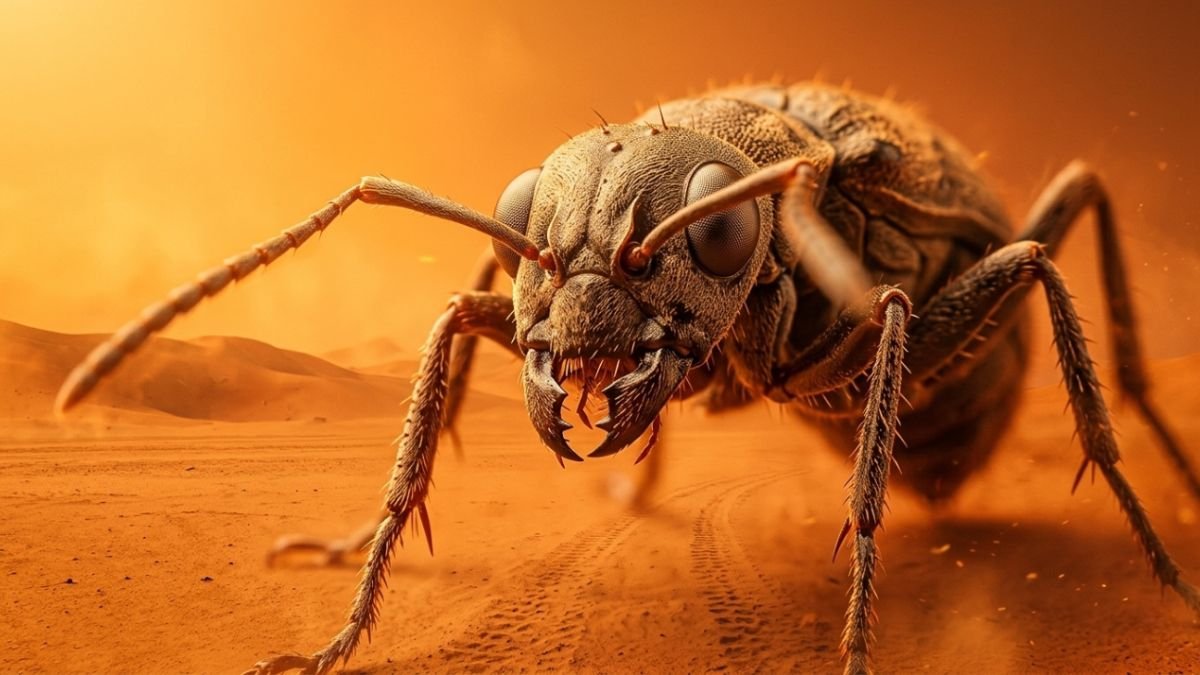
For a long time, human civilization has sought to determine whether life exists anywhere other than on Earth. Mars has often stood at the very center of this quest. In recent years, based on certain images and research, claims have emerged suggesting that shapes resembling insects or reptiles can be observed on the surface of Mars. These claims have further heightened public curiosity, sparking widespread discussion on the subject across social media platforms and within the scientific community.
Although scientific institutions—such as NASA—are continuously studying the potential for life on Mars, no definitive evidence regarding the existence of any complex organisms—such as insects or reptiles—has surfaced thus far. Nevertheless, certain mysterious shapes and chemical signatures discovered on Mars continue to be subjects of immense interest to scientists.
Where Did the Claims of ‘Insects’ and ‘Reptiles’ on Mars Originate?
The renewed debate regarding complex life on Mars intensified when an entomologist (insect scientist) named William Romoser presented an analysis of several images. In photographs of the Martian surface, he identified certain shapes that he described as bearing a resemblance to insects or reptiles found on Earth.
According to Romoser, these shapes exhibit characteristics that could be interpreted as belonging to a living organism—such as jointed appendages, wing-like structures, or forms suggesting the capability of flight. He termed these formations “mosaic-type” structures, noting that they appear to combine a variety of distinct features simultaneously.
While these claims certainly piqued public curiosity, the majority of experts within the scientific community do not subscribe to these conclusions.
Why the Scientific Community Does Not Accept These Claims
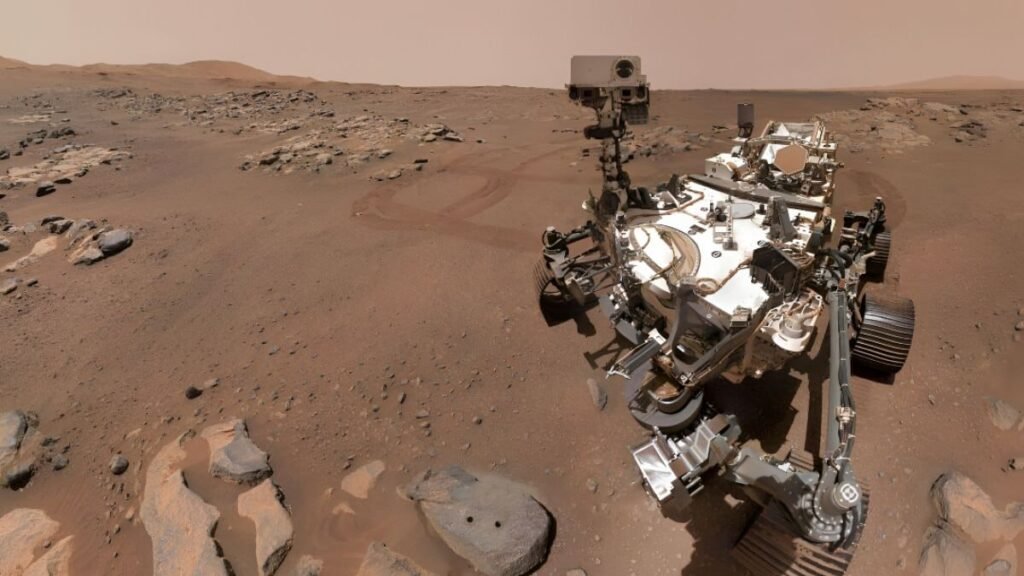
Most scientists believe that the shapes visible in the Mars images are, in reality, likely the result of natural rock formations or geological structures. A psychological explanation is also frequently cited for this phenomenon: pareidolia.
Pareidolia is a psychological process in which the human brain perceives familiar patterns or images within random or ambiguous shapes. For instance, seeing faces in clouds or perceiving animal-like shapes in rock formations. Scientists suggest that similar phenomena may be occurring in many images of the Martian surface as well.
Furthermore, Mars’s atmosphere is not considered conducive to complex life. Its atmosphere consists almost entirely of carbon dioxide, with a very low oxygen content. Additionally, the atmospheric pressure and temperature there differ significantly from those on Earth, creating extremely challenging conditions for the survival of complex organisms.
What Scientists Are Actually Searching for on Mars
Although claims regarding the presence of insects or reptiles remain controversial, the discoveries currently being made by scientists on Mars are of immense significance. The rovers sent to the Red Planet are continuously gathering new data.
The Curiosity rover has made several intriguing discoveries within Mars’s Gale Crater region. This rover has identified complex carbon molecules, including long carbon chains comprising 12 atoms. These molecules are considered to be among the fundamental chemical building blocks of life.
In addition, strange structures known as “boxwork”—which resemble a lattice or mesh—have also been discovered in this region. Scientists are still attempting to understand how these structures formed and whether they might be linked to microbial life that may have existed there in the past.
The Perseverance Rover’s Significant Discovery
Another pivotal mission in the search for life on Mars is the Perseverance Rover. This rover is currently studying the Jezero Crater region—an area scientists believe to be the remnant of an ancient lake and river delta.
The rover is equipped with state-of-the-art instruments designed to search for “biosignatures”—chemical or physical indicators that could point to the past existence of microbial life.
Recently, the rover discovered specific mineral patterns in the Cheyava Falls region. These patterns include markings resembling “leopard spots,” formations that on Earth are often created by the activities of microorganisms.
Are These Signs of Life?
According to scientists, these discoveries are extremely intriguing; however, they cannot yet be considered definitive proof of life. Such mineral patterns can often be formed through purely geological processes.
Consequently, scientists are currently studying these signals with caution. They are attempting to determine whether these structures were indeed formed by ancient microbial life or if they are merely the result of natural chemical processes.
Answers May Come from Mars Sample Return Mission
In the future, the greatest hope for finding answers to these questions lies in an ambitious endeavor known as the Mars Sample Return mission. The objective of this mission is to retrieve rock and soil samples from Mars and bring them back to Earth.
Once these samples undergo rigorous analysis in terrestrial laboratories, scientists may gain clearer insights into whether or not life ever existed on Mars.
Conclusion
Claims regarding the existence of insects or reptiles on Mars are currently unsupported by scientific evidence. While certain shapes visible in photographs may certainly spark the human imagination, from a scientific standpoint, no clear evidence confirming the existence of complex life has yet been found.
Nevertheless, the search for life on Mars is far from over. Rover missions continue to yield new discoveries, and future missions are poised to play a pivotal role in unraveling this mystery.
It remains possible that, in the coming years, scientists will be able to determine whether microbial life ever existed on Mars. However, for the time being, the presence of complex organisms such as insects and reptiles remains merely an intriguing hypothesis, for which no concrete evidence has yet emerged.
FAQs
Q. Have scientists found insects or reptiles on Mars?
A. No, there is currently no scientific evidence proving the existence of insects or reptiles on Mars.
Q. Why do some people think there are insects on Mars?
A. Some researchers believe certain shapes in rover images resemble insects or reptiles.
Q. What do most scientists say about these claims?
A. Most scientists believe these shapes are caused by pareidolia, where the brain sees familiar patterns in random objects.
Q. What have NASA rovers actually discovered on Mars?
A. Rovers like Curiosity and Perseverance have found complex organic molecules and possible biosignatures.
Q. How might scientists confirm if life ever existed on Mars?
A. Future missions like Mars Sample Return will bring rock samples to Earth for detailed laboratory testing.