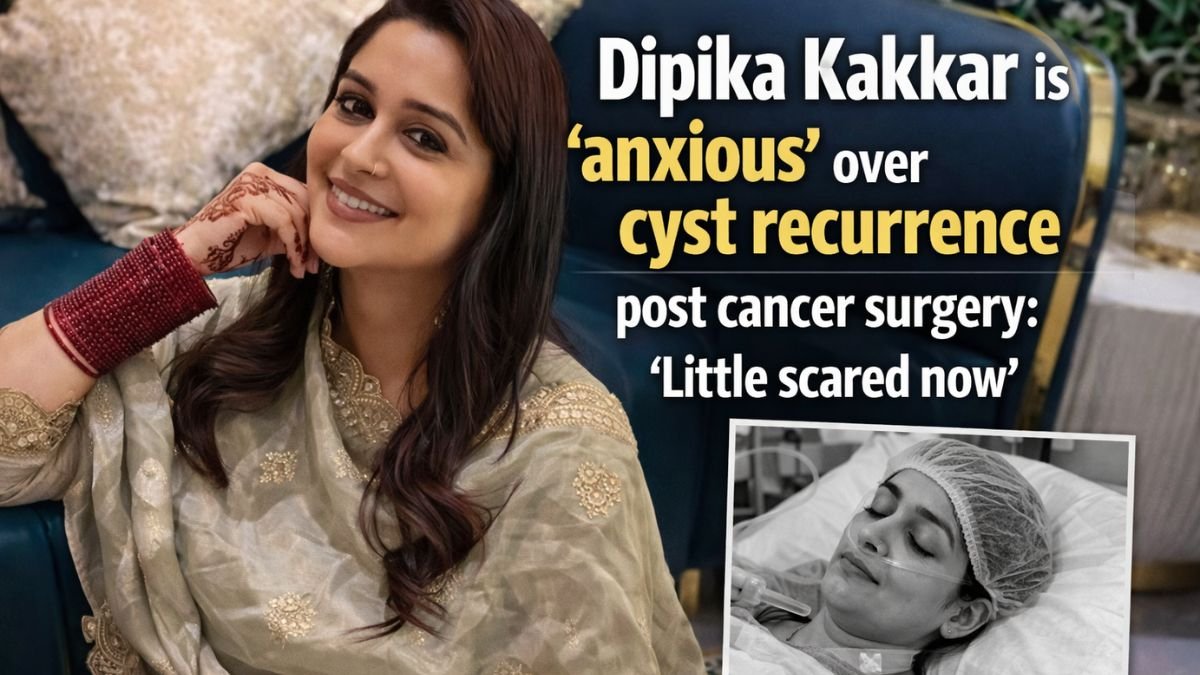
Life after a major health battle is often filled with a mix of relief, gratitude, and lingering fear. For popular television actress Dipika Kakar, the journey after cancer surgery has not been entirely free of emotional challenges. While the procedure marked a significant step toward recovery, it also brought with it a new wave of anxiety—one rooted in the possibility of recurrence. Recently, Dipika candidly shared that she feels “a little scared now,” highlighting the emotional reality many patients face even after successful treatment.
Her honesty sheds light on an important aspect of recovery that is often overlooked. Physical healing may take weeks or months, but emotional healing can be a longer and more complex journey. Dipika’s openness has resonated with many, offering a glimpse into the inner struggles that follow a life-altering diagnosis.
The Emotional Aftermath of Cancer Treatment
Cancer is not just a physical illness; it deeply impacts a person’s mental and emotional well-being. For someone like Dipika Kakar, who has always appeared strong and composed in the public eye, admitting vulnerability is both courageous and relatable.
After undergoing surgery, patients often expect life to return to normal. However, the fear of recurrence can linger quietly in the background. This fear is not irrational—it stems from the uncertainty that accompanies any serious illness. Even when medical reports are positive, the mind can wander toward “what if” scenarios.
Dipika’s admission of anxiety reflects this universal emotional experience. It is a reminder that recovery is not a straight path but a process filled with ups and downs, moments of strength, and moments of doubt.
Understanding the Fear of Recurrence
The fear of a cyst or cancer returning is something many survivors experience. It is a psychological response that comes from having faced a life-threatening condition. For Dipika, this fear has manifested as anxiety about the possibility of cyst recurrence after her surgery.
This kind of fear often intensifies during routine check-ups or when the body shows even minor changes. A small symptom that might have been ignored earlier can now trigger concern. It is not about being overly worried; it is about being aware of how fragile health can feel after such an experience.
Dipika’s words, “little scared now,” capture this delicate emotional state perfectly. It is not overwhelming panic, but a quiet, persistent unease that occasionally surfaces.
The Strength Behind Vulnerability
One of the most powerful aspects of Dipika Kakar’s revelation is her willingness to be vulnerable. In a world where celebrities are often expected to appear flawless and resilient, speaking openly about fear and anxiety is a bold step.
Her honesty helps break the stigma around discussing mental health, especially in the context of physical illness. It sends a message that feeling scared does not make someone weak. On the contrary, acknowledging fear is a sign of emotional strength.
By sharing her experience, Dipika has created a sense of connection with others who may be going through similar struggles. She reminds people that they are not alone in their journey, and that it is okay to feel uncertain even after overcoming a major challenge.
The Role of Support Systems in Recovery
Recovery from cancer is rarely a solitary journey. Family, friends, and loved ones play a crucial role in providing emotional support. For Dipika Kakar, her close circle has been a source of strength throughout her health journey.
Having a support system can make a significant difference in managing anxiety. Conversations, reassurance, and simply having someone to listen can ease the burden of fear. Emotional support helps individuals process their feelings and regain a sense of stability.
Dipika’s journey also highlights the importance of empathy from those around patients. Understanding that recovery includes emotional healing can encourage more compassionate and supportive interactions.
Balancing Hope and Uncertainty
One of the most challenging aspects of post-cancer life is finding a balance between hope and uncertainty. On one hand, there is gratitude for recovery and the opportunity to move forward. On the other hand, there is an awareness that health can be unpredictable.
Dipika Kakar’s experience reflects this balance. While she continues to focus on healing and positivity, she also acknowledges the fear that occasionally arises. This duality is a natural part of the healing process.
Learning to live with uncertainty does not mean giving in to fear. Instead, it involves accepting that some questions may not have immediate answers and choosing to move forward with courage despite that.
The Importance of Mental Health Awareness
Dipika’s openness brings attention to the importance of mental health in medical recovery. Often, the focus remains on physical healing, while emotional well-being is overlooked. However, anxiety, stress, and fear can significantly impact a person’s quality of life.
Recognizing these emotions and addressing them is essential. Whether through counseling, mindfulness practices, or simply open conversations, taking care of mental health is as important as following medical advice.
Her story encourages a broader conversation about how society views recovery. It emphasizes that healing is not complete until both the body and mind are cared for.
Inspiring Others Through Honesty
Public figures have the ability to influence and inspire, and Dipika Kakar’s honesty is a powerful example of this. By sharing her fears, she has created a space for others to speak about their own experiences without hesitation.
Many people who go through similar health challenges may struggle in silence, unsure of how to express their emotions. Seeing someone they admire openly discuss anxiety can be incredibly reassuring.
Dipika’s story is not just about fear; it is also about resilience. It shows that even in moments of uncertainty, there is strength in acknowledging one’s feelings and continuing to move forward.
Moving Forward with Courage
Despite her anxiety, Dipika Kakar continues to focus on her recovery and personal well-being. Her journey is a testament to the human ability to adapt and persevere, even in the face of fear.
Moving forward does not mean eliminating fear entirely. It means learning to coexist with it while still embracing life. For Dipika, this involves staying positive, seeking support, and trusting the process of healing.
Her story serves as a reminder that courage is not the absence of fear, but the decision to keep going despite it.
Conclusion: A Story of Strength, Fear, and Hope
Dipika Kakar’s experience after cancer surgery highlights a reality that many people face but few openly discuss. The fear of recurrence, the anxiety that lingers, and the emotional complexity of recovery are all part of the journey.
By sharing her feelings, she has not only shed light on her personal struggles but also given a voice to countless others who may feel the same way. Her story is one of strength, vulnerability, and hope.
In the end, it reminds us that healing is not just about physical recovery. It is about navigating emotions, embracing support, and finding the courage to move forward, even when uncertainty remains.