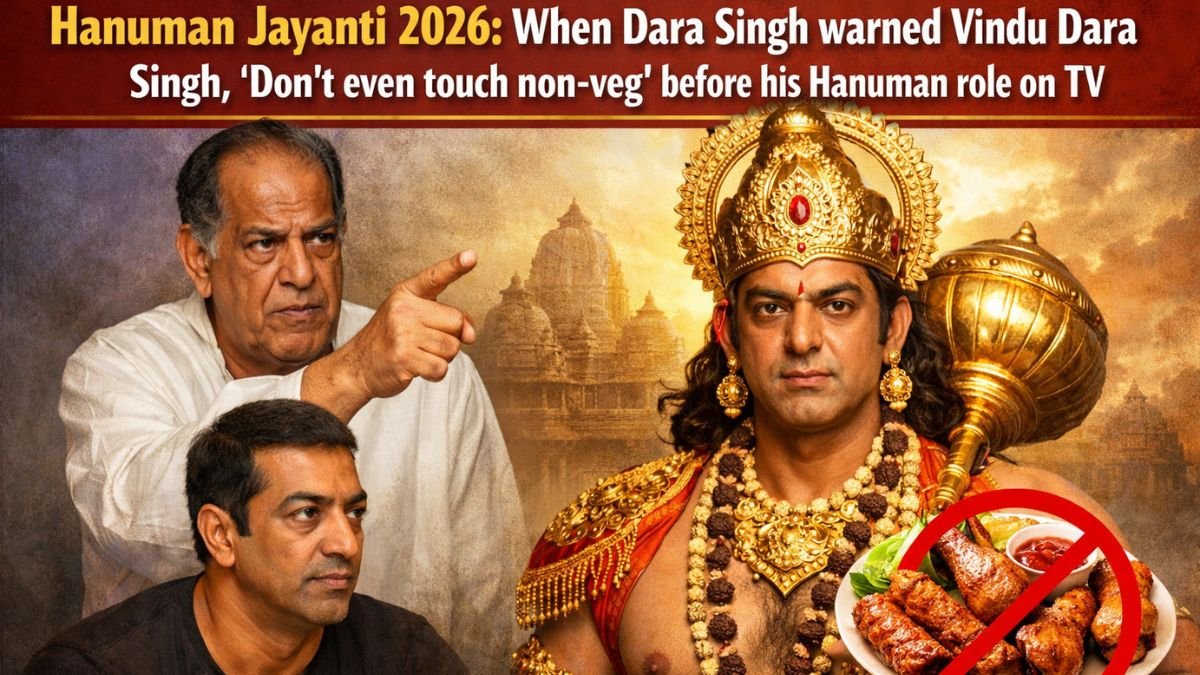
Hanuman Jayanti is not just a religious festival; it is a powerful reminder of devotion, strength, and unwavering faith. As Hanuman Jayanti 2026 approaches, many stories resurface that connect modern life with ancient values. One such fascinating and inspiring story is about legendary wrestler-actor Dara Singh and his son Vindu Dara Singh. It is a story that beautifully blends spirituality with the world of television and acting, highlighting how seriously mythological roles were once treated in Indian entertainment.
The anecdote revolves around a simple yet powerful instruction: “Don’t even touch non-veg.” At first glance, it may seem like just a dietary suggestion, but in reality, it reflects a deeper philosophy rooted in respect for the divine character of Hanuman. This moment not only defines Dara Singh’s personality but also reveals the cultural mindset of an era where playing a divine role was considered a sacred responsibility rather than just another acting assignment.
Dara Singh: More Than Just an Actor
To understand the weight of this advice, one must first appreciate who Dara Singh was. Known across India as a wrestling champion and a beloved actor, Dara Singh became synonymous with the character of Lord Hanuman after portraying him in the iconic television serial Ramayan. His performance was not merely about physical strength or screen presence; it was about embodying the spirit of devotion, humility, and righteousness.
For millions of viewers, Dara Singh was not just playing Hanuman—he was Hanuman. His portrayal left such a lasting impression that even today, decades later, people remember him with reverence. This deep connection with the character explains why he treated the role with utmost seriousness and expected the same level of dedication from others, including his own son.
A Father’s Guidance Rooted in Belief
When Vindu Dara Singh was preparing to take on the role of Hanuman for television, his father gave him a piece of advice that would stay with him forever. Dara Singh warned him to completely avoid non-vegetarian food while playing the role. This was not a casual suggestion but a firm instruction, almost like a rule that had to be followed without question.
For Dara Singh, this was about maintaining purity—both physical and mental. In Indian spiritual traditions, food is often associated with one’s state of mind and inner discipline. By avoiding non-vegetarian food, an actor could align more closely with the sattvic (pure) qualities associated with divine characters like Hanuman.
This advice also reflected Dara Singh’s belief that an actor must respect the emotions and faith of the audience. When portraying a deity, the responsibility becomes even greater, as viewers often see the character as a representation of their beliefs and devotion.
Vindu Dara Singh’s Perspective
For Vindu Dara Singh, stepping into the role of Hanuman was both an honor and a challenge. Carrying forward his father’s legacy was no easy task, especially when the expectations were so high. However, he chose to follow his father’s advice with sincerity and dedication.
In various interviews, Vindu has spoken about how his father’s words influenced his approach to the role. Avoiding non-vegetarian food was not just about discipline; it became a way for him to mentally prepare and connect with the character on a deeper level. It helped him understand that playing Hanuman was not just about acting—it was about living the role, even if temporarily.
This commitment added authenticity to his performance and allowed him to experience the spiritual aspect of the character, something that audiences could genuinely feel on screen.
The Cultural Significance of Hanuman
The story gains even more depth when we consider the cultural and spiritual importance of Hanuman in Indian society. Hanuman is revered as the ultimate devotee of Lord Rama, a symbol of strength, loyalty, and selfless service. His life teaches lessons of humility, courage, and unwavering faith.
Because of this deep reverence, portraying Hanuman on screen is not just another acting job. It requires a sense of responsibility and respect that goes beyond technical skills. Actors who take on such roles often feel a moral obligation to maintain a certain lifestyle during the filming period.
Dara Singh understood this better than most, having experienced it firsthand. His advice to Vindu was, therefore, not just about maintaining a tradition but about preserving the sanctity of the character.
Acting as a Spiritual Practice
One of the most interesting aspects of this story is how it blurs the line between acting and spirituality. In today’s fast-paced entertainment industry, roles are often approached with a professional mindset, focusing on performance, ratings, and audience engagement. However, there was a time when mythological roles were treated almost like spiritual practices.
Actors would prepare themselves mentally and physically, often following specific rituals or disciplines to align with the character they were portraying. This approach added a layer of authenticity and depth to their performances, making them more relatable and impactful for the audience.
Dara Singh’s instruction to avoid non-veg can be seen as part of this broader tradition. It reflects a belief that external discipline can influence internal transformation, allowing the actor to truly embody the essence of the character.
The Changing Landscape of Television
The story also highlights how much the television industry has evolved over the years. Today, actors often juggle multiple projects, and the approach to roles has become more flexible and practical. While dedication and hard work are still essential, the spiritual dimension that once defined mythological roles is less commonly emphasized.
However, stories like this serve as a reminder of a time when art and faith were deeply interconnected. They encourage modern actors and creators to reflect on the importance of authenticity and respect, especially when dealing with culturally significant subjects.
Lessons Beyond the Screen
At its core, this anecdote is not just about acting or television; it is about values. Dara Singh’s advice carries a universal message about discipline, respect, and the importance of staying true to one’s beliefs. It shows how even small actions, like choosing what to eat, can have a larger impact when guided by intention and purpose.
For audiences, this story adds a new layer of appreciation for the performances they see on screen. It reminds them that behind every role, there is a journey of preparation, sacrifice, and dedication.
Hanuman Jayanti 2026: A Time for Reflection
As Hanuman Jayanti 2026 approaches, this story feels more relevant than ever. It encourages us to look beyond rituals and celebrations and focus on the deeper values that Hanuman represents. Strength, devotion, humility, and discipline—these are qualities that remain timeless and universal.
The story of Dara Singh and Vindu Dara Singh serves as a beautiful example of how these values can be applied in everyday life, even in unexpected fields like acting. It reminds us that true devotion is not limited to temples or prayers; it can be expressed through our actions, choices, and the way we approach our responsibilities.
A Legacy That Lives On
Even years after his passing, Dara Singh’s legacy continues to inspire generations. His portrayal of Hanuman remains iconic, and his values continue to influence those who knew him and those who admire his work. Through stories like this, we get a glimpse of the man behind the legend—a man who believed in discipline, respect, and the power of faith.
For Vindu Dara Singh, this legacy is both a responsibility and a source of inspiration. By following his father’s guidance, he not only honored his memory but also contributed to keeping those values alive in the world of entertainment.
Conclusion: More Than Just a Story
In the end, this is more than just an interesting anecdote from the world of television. It is a story about the intersection of tradition and modernity, about the importance of staying connected to one’s roots, and about the power of belief in shaping our actions.
As we celebrate Hanuman Jayanti 2026, stories like these remind us of the deeper meaning behind the festival. They encourage us to embrace the values that Hanuman stands for and to carry them forward in our own lives.
Whether you see it as a lesson in acting, a reflection of cultural traditions, or simply a touching father-son moment, the message remains the same: true dedication comes from the heart, and when combined with discipline and respect, it can create something truly timeless.