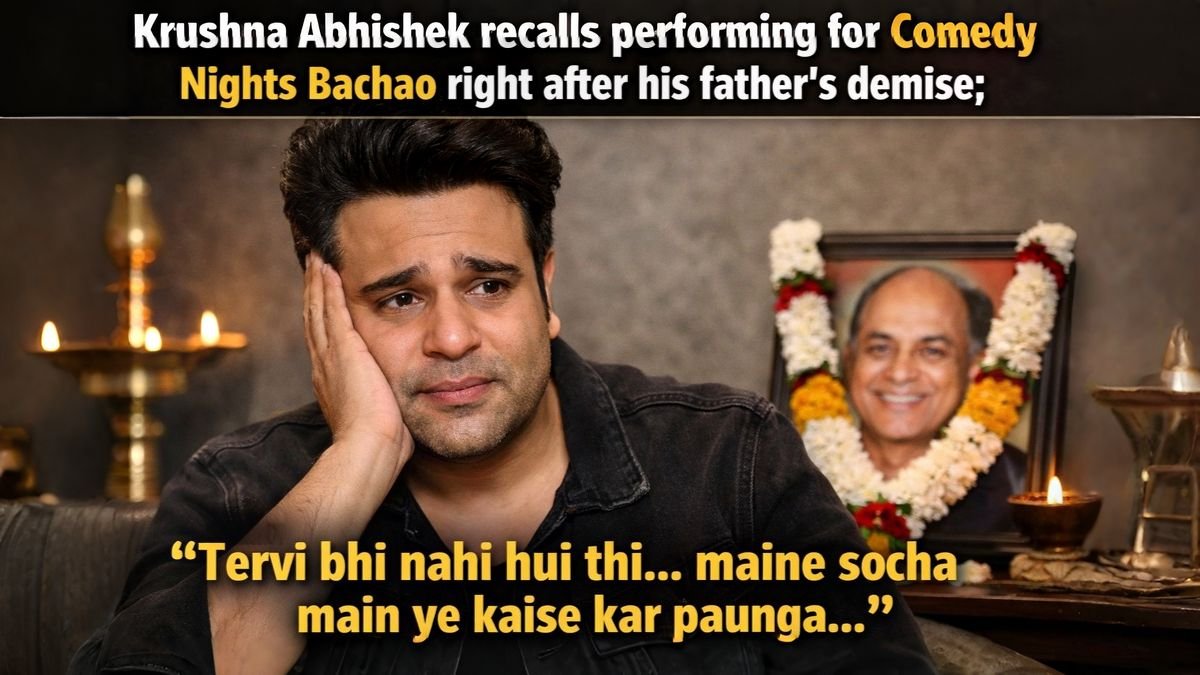
The world of entertainment often appears glamorous from the outside, filled with laughter, applause, and celebration. Yet behind the curtain, artists frequently carry burdens that remain unseen by their audiences. One such deeply moving story has recently come to light through Krushna Abhishek, who recalled one of the most difficult phases of his life—performing on Comedy Nights Bachao shortly after the passing of his father.
His words, “Tervi bhi nahi hui thi… maine socha main ye kaise kar paunga…,” reflect not just grief, but also the immense pressure and emotional conflict that artists often face. This revelation offers a rare glimpse into the personal struggles that lie beneath the surface of a performer’s professional commitments.
The Burden Behind the Smile
For a comedian, the expectation is simple yet demanding: make people laugh. However, laughter becomes incredibly difficult when life delivers a devastating blow. Krushna Abhishek’s father’s demise was a deeply personal tragedy, one that would naturally require time, mourning, and emotional healing.
In many cultures, including Indian traditions, the “tervi” or the thirteenth-day ritual holds great significance as a period of mourning and remembrance. Krushna’s statement that even this ritual had not taken place yet highlights just how recent and raw his loss was at the time he stepped onto the stage.
Despite this, he found himself in a situation where he had to perform. The internal struggle he experienced—questioning how he could possibly make others laugh while dealing with such profound grief—is something that resonates deeply with anyone who has ever had to carry on with responsibilities during a personal crisis.
The Demands of Showbiz
The entertainment industry operates on tight schedules, contractual obligations, and relentless expectations. Shows must go on, episodes must be delivered, and audiences expect consistency. For actors and comedians, taking a break is not always a straightforward decision, especially when multiple people and livelihoods are tied to a production.
In the case of Comedy Nights Bachao, a show known for its roast-style humor and energetic performances, the pressure to deliver is even higher. The format demands spontaneity, wit, and a lively presence—qualities that are incredibly hard to summon when one is emotionally drained.
Krushna Abhishek’s decision to perform during such a time underscores the harsh reality of the industry. It is not just about talent; it is about resilience, discipline, and sometimes, the painful act of putting one’s personal feelings aside for the sake of professional commitments.
A Moment of Inner Conflict
Krushna’s recollection reveals a moment of intense inner conflict. The thought, “How will I be able to do this?” is not just a passing concern—it is a profound emotional dilemma. On one hand, there is the grief of losing a loved one; on the other, the responsibility toward work and the expectations of audiences and colleagues.
This conflict is not unique to celebrities. Many people across professions experience similar situations where personal loss and professional duties collide. However, what makes Krushna’s story particularly striking is the nature of his profession. Unlike many jobs where one can work quietly or behind the scenes, comedy requires emotional openness and energy.
To stand under bright lights, face a live audience, and deliver humor while carrying the weight of loss is an extraordinary challenge. It speaks volumes about his mental strength and dedication to his craft.
The Strength to Continue
While Krushna Abhishek’s words reflect vulnerability, they also reveal strength. Continuing to work during such a difficult time is not an easy choice. It requires a level of emotional control and determination that few can fully comprehend.
For many artists, their work becomes a form of escape, a way to channel emotions and find temporary relief from pain. It is possible that stepping onto the stage provided Krushna with a momentary distraction from his grief. At the same time, it would have required immense effort to maintain composure and deliver a performance that met the expectations of the show.
This duality—using work as both a refuge and a responsibility—adds another layer to his story. It shows that even in moments of deep sorrow, the human spirit has the capacity to endure and adapt.
The Reality Behind Comedy
Comedy is often perceived as light-hearted and effortless, but in reality, it is one of the most demanding forms of performance. Timing, expression, audience connection, and energy all play crucial roles in making humor work.
Krushna Abhishek’s experience highlights the contrast between what audiences see and what performers go through behind the scenes. While viewers may have enjoyed the episode and laughed at the jokes, they were unaware of the emotional turmoil the performer was experiencing.
This contrast serves as a reminder that entertainers are human beings first. They experience the same emotions, losses, and challenges as anyone else. Their ability to continue performing despite these struggles is both admirable and humbling.
Emotional Honesty and Public Connection
By sharing this personal story, Krushna Abhishek has opened a window into his life that allows audiences to connect with him on a deeper level. In an age where public figures often maintain carefully curated images, such moments of honesty stand out.
His statement does not seek sympathy; rather, it reflects a genuine expression of what he went through. This authenticity resonates with people, as it reminds them that even those who bring joy to others have their own battles to fight.
Stories like these also help in breaking the illusion that success or fame shields individuals from pain. Instead, they highlight the shared human experience of loss, resilience, and the need to keep moving forward.
The Importance of Empathy
Krushna Abhishek’s experience also serves as a reminder of the importance of empathy—both within the entertainment industry and among audiences. Recognizing that performers may be dealing with personal challenges can foster a more compassionate environment.
For colleagues and production teams, understanding and support can make a significant difference during such times. For audiences, it is an opportunity to appreciate the effort and dedication that goes into every performance.
Empathy does not diminish the value of entertainment; rather, it enhances it by acknowledging the human effort behind it. It allows us to view performances not just as content, but as expressions of real people with real emotions.
A Story That Resonates Beyond the Industry
While this incident is rooted in the world of television and comedy, its message extends far beyond. It speaks to anyone who has had to navigate the difficult balance between personal loss and professional responsibilities.
Life does not pause for grief. Responsibilities continue, deadlines remain, and expectations persist. In such situations, individuals often find themselves asking the same question that Krushna did: “How will I be able to do this?”
The answer, as his story shows, lies in resilience, courage, and sometimes, simply taking one step at a time. It is not about being unaffected by pain, but about finding the strength to carry on despite it.
Conclusion: A Testament to Human Resilience
Krushna Abhishek’s recollection of performing on Comedy Nights Bachao shortly after his father’s demise is more than just an anecdote—it is a powerful testament to human resilience. It reveals the emotional challenges that lie behind the world of entertainment and the strength required to overcome them.
His words, filled with vulnerability and honesty, remind us that even in the face of profound loss, individuals can find the courage to fulfill their responsibilities. At the same time, they encourage us to approach others with empathy and understanding, recognizing that everyone carries their own unseen struggles.
In the end, this story is not just about a comedian performing through grief. It is about the universal human experience of loss, the strength to endure, and the quiet determination to keep moving forward, even when the heart feels heavy.