
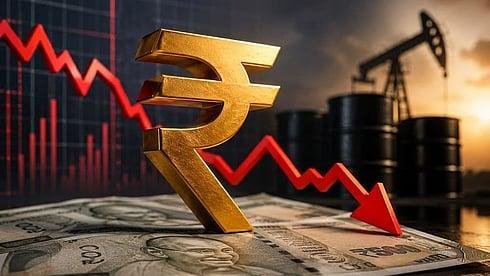
The recent rise in value of Indian Rupee against US Dollar has once again seen a reversal of fortunes as increased crude oil prices and increased dollar demand has once again exerted pressure on the currency’s upward run. The Indian Rupee was up for eight consecutive days but has now declined again on 22 October 2026. The most recent development has again made oil import prices, market uncertainties and RBI’s efforts to support currency front and center.
As reported in Reuters, on October 22, the Indian rupee closed the day trading around ₹94.82 per US dollar due to depreciation pressure on the rupee as prices of Brent crude rose in tandem with the heightened geopolitical situation. The reversal came after a series of gains following positive sentiment due to foreign capital inflows and central bank interventions. According to reports in Reuters, the rupee’s run of eight sessions had been broken due to the rise in the price of oil.
The important issue here is that it is not certain how long the Indian Rupee Rally will last if the prices of energy stay high and the demand for dollars from importers continues to be strong. The solution to this puzzle lies in many interrelated elements, including global prices of crude oil, foreign investments, and the strength of the US dollar against the RBI.
Why Is the Indian Rupee Rally Losing Momentum?
A currency may become strong through foreign investment into a country, exports of foreign currencies, or increase in the demand for domestic currency. But the strength of the currency may be difficult to maintain when the economy is suffering from continuous demand for foreign currency.
India is a net importer of the total quantity of crude oil it utilizes. The oil importers require dollars in order to be able to pay for their purchases from foreign suppliers, hence giving a continued need for the US dollar. In case of higher prices of crude oil, more dollars are needed for purchasing oil.
Thus, there is a dual threat for the Indian rupee. An increase in oil prices may result in higher imports by India, while the need to procure extra dollars may create pressure on the exchange rate. A depreciation of the rupee will make oil imports even more expensive in rupee terms.
The latest reversal illustrates why a short-term currency recovery does not necessarily mean the underlying economic pressures have disappeared. Foreign investment inflows and central bank actions can support the market temporarily, but sustained improvement generally requires a more favourable combination of oil prices, capital flows and dollar demand.
Rising Oil Prices Increase Pressure on India’s Import Bill
Crude oil is one of the most important external cost factors for the Indian economy. International oil prices influence the cost of imported petroleum, fuel production, transport and several industrial activities.
When oil prices rise sharply, Indian refiners and other importers may need to spend more dollars to secure supplies. This can increase the country’s oil import bill and place pressure on its merchandise trade balance, depending on import volumes, domestic demand and export performance.
The effect can extend beyond the energy sector. Higher transport and production costs can influence the prices of goods and services across the economy. The eventual impact on retail inflation depends on how much of the increase is passed on to consumers, along with government policies, taxes, company margins and domestic market conditions.
For businesses that depend heavily on transportation, imported materials or fuel, persistent energy price increases can narrow margins or raise operating costs. Households may also feel the effects if higher energy costs are reflected in transport fares, food distribution expenses or other everyday prices.
The October 22 market reversal came as Brent crude rose to around $112.40 per barrel, according to Reuters. That increase was linked to concerns about geopolitical tensions in the Middle East. Oil prices can move rapidly when markets anticipate potential supply disruptions, even before a major change in actual supply is confirmed.
For the Indian currency, the duration of the oil price increase matters as much as the initial jump. A brief spike may have a limited impact, while a prolonged period of expensive crude can place more persistent pressure on import costs and foreign exchange demand.
How US Dollar Demand Affects the Rupee vs US Dollar Exchange Rate
The rupee’s value against the US dollar reflects the balance of demand and supply in the foreign exchange market. Import payments are only one source of dollar demand. Indian companies may also purchase dollars to repay foreign-currency loans, pay for overseas services or hedge against potential exchange-rate changes.
Foreign investors can influence the market in the opposite direction. When they invest in Indian shares or bonds, the conversion of foreign currency into rupees can support the domestic currency. When they withdraw investments, they may sell rupees and buy dollars, adding pressure to the exchange rate.
The broader strength of the US dollar also matters. During periods of global uncertainty, investors may prefer assets they perceive as safer or more liquid. If demand for US dollars increases internationally, emerging-market currencies, including the rupee, may face additional headwinds.
Expectations can reinforce these movements. If businesses anticipate further rupee depreciation, some may buy dollars earlier or increase hedging activity. That behaviour can raise near-term foreign exchange demand, although the effect varies with market conditions and the type of transaction.
Consequently, the Rupee vs US Dollar rate is not determined by oil prices alone. It reflects a combination of trade payments, foreign investment, interest-rate expectations, global risk appetite, corporate hedging and central bank activity.
RBI Measures May Support the Currency, but Cannot Remove Every Pressure
The Reserve Bank of India can take steps to reduce excessive volatility in the foreign exchange market. Depending on market conditions, these may include buying or selling foreign currency, adjusting regulations governing certain foreign exchange transactions, and using other liquidity-management measures.
In October 2026, the RBI introduced measures intended to address pressure from oil companies’ dollar purchases and certain corporate foreign exchange positions. Reuters reported that the measures helped support a sharp recovery in the rupee earlier in the month.
Such interventions can influence the timing and distribution of dollar demand, improve market functioning and discourage destabilising trading behaviour. However, they do not automatically eliminate the economic need to pay for imported oil or guarantee a lasting appreciation of the currency.
The distinction is important: supporting the rupee during a period of market stress is different from permanently changing the economic factors that determine its value. If crude prices remain high and external dollar demand continues to exceed available supply, pressure can return even after a successful rally.
Policy decisions also involve trade-offs. Currency stability matters for inflation and financial confidence, but authorities must consider liquidity, economic growth and the functioning of financial markets. The appropriate response depends on the source, scale and persistence of the pressure.
What Does Rupee Depreciation Mean for Indian Consumers and Businesses?
Rupee depreciation means that more rupees are required to purchase one US dollar. Its effects vary across industries and households.
Import-dependent businesses may face higher costs for crude oil, electronics, machinery, chemicals and other goods priced internationally. Companies with foreign-currency debt can also face increased repayment costs when their earnings are primarily in rupees.
Consumers may feel indirect effects if businesses pass higher import or transportation costs into retail prices. The size and timing of that impact depend on competition, pricing policies, taxes, subsidies and whether global commodity prices remain elevated.
A weaker rupee can offer benefits in some areas. Exporters earning dollars may receive more rupees when they convert their revenue, while some tourism and service businesses may become more price-competitive for foreign customers. These benefits are not universal, however. Exporters that rely on imported inputs or have foreign-currency liabilities may see some of their gains offset.
For this reason, a weaker currency is neither automatically good nor automatically bad for the economy. The outcome depends on the scale of the movement, the speed of adjustment and the exposure of individual sectors.
Indian Currency Outlook: What Should Markets Watch Next?
The near-term Indian currency outlook will depend on whether the pressures behind the latest reversal ease or persist. Several indicators are particularly important.
First, international crude oil prices will remain a major factor. A sustained decline in oil prices could reduce the cost of imports and moderate dollar demand from energy buyers. Continued increases could have the opposite effect.
Second, market participants will watch foreign portfolio investment flows. Consistent foreign investment can provide support to the rupee, while large outflows may increase demand for dollars. One large investment event can influence trading temporarily, but the durability of the effect depends on wider market conditions.
Third, the US dollar’s international performance and US interest-rate expectations will influence currency markets. Changes in Treasury yields, economic data and expectations about Federal Reserve policy can alter the relative attractiveness of dollar assets.
Fourth, investors will monitor the RBI’s actions and signals. Measures that reduce concentrated demand or excessive volatility may provide support, but the market will also assess whether the underlying balance of foreign exchange demand and supply is improving.
Finally, India’s trade balance, inflation trends and broader economic outlook will help determine how resilient the currency is to external shocks. No single indicator can reliably predict the rupee’s next move in isolation.
Conclusion
A challenging task awaits the Indian Rupee Rally amid the escalating oil prices and continued strength in the US dollar. The Indian rupee’s eight consecutive rally sessions ending on October 22, 2026, is an example of how fast markets’ mood can be affected by increased energy prices.
The steps taken by RBI and foreign investments may prove helpful for the currency, but the real challenge for recovery would be improvement in external factors. The factors that need to be followed by investors and people in general are the price of crude oil, foreign investments, the value of dollar, and the import cost of India.
The direction of the rupee remains uncertain. Rather than treating a short rally or a single day’s decline as a lasting trend, readers should assess the currency alongside the economic factors driving it.