
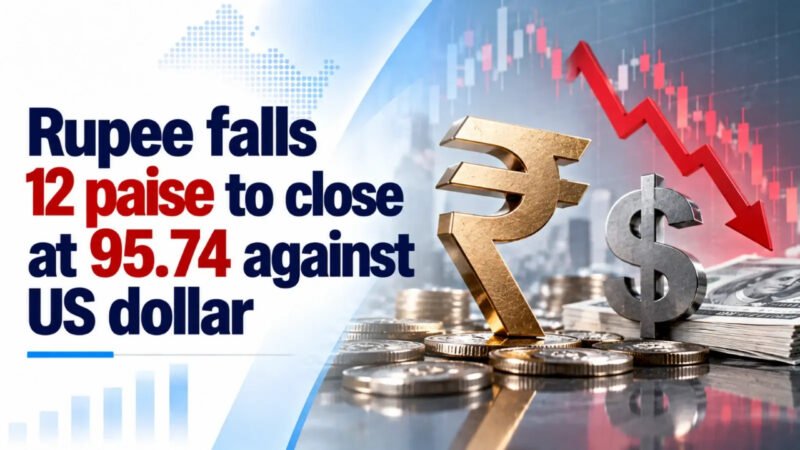
Indian Rupee Depreciates Against Dollar on Higher Oil Price
The Indian rupee depreciated by 12 paise to close at ₹94.50 per US dollar in early trade on Thursday, October 22, 2026, due to increasing price of oil and weakening of domestic stock markets, which had an adverse effect on the Indian rupee. It should be noted that the rupee had gained ground the day before.
The new trend is significant for business organizations, importers, investors, and consumers in India because the exchange rate between rupee and dollar affects the price of foreign goods, trips abroad, and foreign sources of energy and raw materials. A lower value of rupee implies the need for more rupees to purchase US dollars.
But then, the early trade rate is just an example of what goes on in the market. There is constant change in currency rates during the course of the day, and the final rate could be different from the early trade rate. This could also be due to the added value of the service fee.
Rupee Dollar Rate Today: Key Details
The main figures reported for the Indian currency on October 22 are summarised below.
| Market detail | Latest reported information |
| Date | Thursday, October 22, 2026 |
| Currency pair | Indian rupee versus US dollar |
| Early-trade exchange rate | ₹94.50 per US dollar |
| Reported movement | Down 12 paise |
| Main pressure factors | Higher crude oil prices and weakness in domestic markets |
| Market status | Early-trade snapshot; not the closing rate |
The figures reflect early trading reported by financial news outlets. Readers should check a live market source or their financial institution for the latest available quote before making currency transactions.
Why Did the Indian Rupee Fall Against the US Dollar?
The movement of currency does not necessarily have one reason alone. Early trade fall in the rupee has been linked to higher crude oil costs and weaker performance in the local equity market. This could be an impact on dollar demand expectations and India’s import bill.
1. Higher crude oil prices
The oil used by India is largely imported. When there is an increase in the price of oil in the international market, India’s oil firms and importers can have a greater demand for dollars when paying the foreign oil suppliers.
If there is an increase in the demand for dollars but not the supply of dollars, it could have a negative impact on the value of the rupee. An increase in oil prices could further increase transport and production costs.
The impact is neither mechanical nor uniform. It varies according to the magnitude of the rise in oil prices as well as the international monetary situation and internal demand for foreign exchange.
2. Weakness in domestic equity markets
Movements in the stock market can influence foreign-exchange sentiment. When Indian equities fall, some investors may reduce exposure to domestic assets. If foreign investors sell Indian investments and convert the proceeds into dollars, that activity can increase demand for the US currency.
Market weakness can also affect confidence and short-term trading decisions. Nevertheless, a fall in share prices does not always lead to rupee depreciation. The actual effect depends on investor flows, market positioning and the broader global environment.
3. Dollar demand and global market conditions
The USD to INR exchange rate is affected by conditions in both India and the United States. US interest-rate expectations, Treasury yields, inflation data and the broader strength of the dollar can influence international capital flows.
When dollar assets offer relatively attractive returns or investors seek safer assets during periods of uncertainty, demand for the US currency may rise. Conversely, a softer dollar or stronger foreign investment inflows can provide support to the rupee.
The rupee’s movement on October 22 should therefore be understood in the context of several interacting factors rather than as evidence of a lasting trend based on one morning’s trading.
What Was Behind the Rupee’s Previous Session?
The latest decline followed a stronger session on Wednesday, October 21. According to a PTI report published by ThePrint, the rupee gained 53 paise and closed at ₹94.38 against the US dollar, supported by foreign-currency inflows associated with the Jio Platforms initial public offering and measures by the Reserve Bank of India (RBI) aimed at managing dollar demand.
The contrast between Wednesday’s appreciation and Thursday’s early decline illustrates the changing balance between supportive and negative factors in the currency market. Foreign investment flows and central-bank measures can support the rupee, while oil prices and weaker domestic market sentiment may work in the opposite direction.
It is important not to assume that a currency must continue moving in the same direction simply because it rose or fell in the previous session. Traders respond to new information, changing orders and expectations throughout the day.
How Does a Weaker Rupee Affect India?
The impact of rupee depreciation differs across households, businesses and industries. Some exporters may benefit from receiving dollar payments, while import-dependent businesses and consumers can face higher costs.
Impact on crude oil and fuel costs
Since crude oil is traded internationally in dollars, a weaker rupee can make oil imports more expensive in Indian-currency terms when the dollar price of oil remains unchanged. If crude prices also rise, the combined pressure can be greater.
However, petrol and diesel prices do not necessarily change immediately or by a fixed amount whenever the rupee moves. Retail fuel prices also depend on international product prices, taxes, refining and distribution costs, and pricing decisions.
Impact on imported goods
Businesses that import electronics, machinery, industrial components, chemicals or other dollar-priced products may need more rupees to pay the same dollar invoice. Some companies can reduce this exposure through currency hedging, long-term contracts or changes to their supply arrangements.
If businesses pass higher costs on to customers, some products may become more expensive. The extent of the impact depends on competition, profit margins, inventory and the availability of alternative suppliers.
Impact on overseas education and travel
A weaker rupee can increase the Indian-currency cost of tuition fees, accommodation and other expenses paid in US dollars. Travellers purchasing dollars or paying dollar-denominated bills may also face higher costs.
The actual amount paid will depend on the exchange rate offered by the bank or authorised provider, along with applicable charges and conversion margins.
Impact on exporters
Exporters that earn revenue in dollars may receive more rupees when they convert those earnings, assuming their dollar receipts and other costs remain unchanged. This can support margins for some businesses.
However, exporters that depend on imported materials or foreign-currency borrowing may also face higher expenses. The overall benefit therefore varies by company and industry.
What Role Does the Reserve Bank of India Play?
The Reserve Bank of India is responsible for formulating monetary policy as well as overseeing the condition of the foreign exchange market. Depending upon market conditions, central bank intervention and regulation can affect liquidity and speculative demand.
Recent reporting has linked RBI measures to efforts to manage dollar demand and support market stability. The previous session’s rupee appreciation was also attributed partly to RBI-related support and foreign-currency inflows.
However, it would be inaccurate to conclude that the RBI guarantees a particular rupee-dollar rate or prevents every decline. Exchange rates respond to domestic and international market conditions, and central-bank actions do not eliminate all currency risk.
For readers, the practical point is that a daily movement of 12 paise does not, on its own, establish whether the RBI will take further action. Any new policy measure should be confirmed through an official RBI announcement or reliable financial reporting.
What Should Readers Watch Next?
How the rupee performs in its coming sessions depends on a number of factors. It is essential to look at the price of crude oil because it relates to India’s import bill and demand for dollars. The performance of the dollar in the markets and global bond yields may affect the currency.
Investors will also watch domestic equity-market performance and foreign investment flows. Sustained foreign-currency inflows may support the rupee, while heavy dollar demand or renewed market uncertainty could increase pressure.
The most useful approach is to monitor the actual exchange rate alongside these factors rather than treating a single early-trade quote as a forecast. A daily movement does not reliably predict where the currency will trade in the following week or month.
Readers who need to buy or sell foreign currency should compare the rate offered by their bank or authorised provider, check fees, and confirm the final amount before completing a transaction.
Frequently Asked Questions
What is the Indian rupee rate against the US dollar today?
On October 22, 2026, the rupee was reported at ₹94.50 per US dollar in early trade, down 12 paise. This is an early-session figure and may change as the market trades.
Why did the rupee fall 12 paise?
Reports linked the early-trade decline to higher crude oil prices and weakness in domestic equity markets. Global dollar demand and broader financial conditions can also influence the exchange rate.
Does a weaker rupee mean petrol prices will rise immediately?
Not necessarily. A weaker rupee can increase the Indian-currency cost of imported crude, but retail fuel prices also depend on international prices, taxes, operating costs and pricing decisions.
Is ₹94.50 the final closing rate?
No. The figure refers to early trade on October 22. The closing rate may be different, and customers may receive different transaction rates from banks or currency providers.
Where can I check the latest USD to INR exchange rate?
Check a reliable financial-market service, a recognised bank or an authorised foreign-exchange provider. For an actual transaction, confirm the provider’s quoted rate and charges rather than relying solely on a headline market rate.
Conclusion
On 22nd October 2026, the Indian rupee depreciated by 12 paise to ₹94.50 per US dollar in initial trading sessions owing to pressure exerted due to rising prices of crude oil and weak performance of the domestic stock market. This depreciation followed a period of appreciation of the currency in the previous session.
A weak rupee will make importing products and dollar transactions more expensive, although some exporters will find it profitable to convert their dollars into more rupees. It ultimately depends upon the type of industry and the extent of exchange rate changes.
For the time being, ₹94.50 is to be considered an early trade reference, not necessarily the rate at which transactions will take place. Investors are advised to keep up-to-date with authentic market information.