
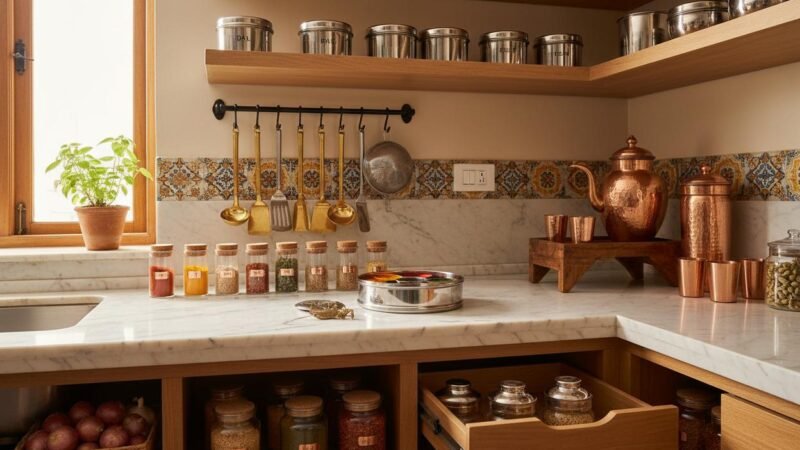
The kitchen is one of the most vital areas in an Indian house. This is where meals are cooked, and where people usually congregate. As per the ancient Indian system of architectural rules called Vastu Shastra, the kitchen is related to the element of fire, nutrition, and the general ambiance of a house.
Many families take into consideration Kitchen Vastu principles while designing their kitchens, picking a direction for cooking and positioning appliances. There are some traditional beliefs which state that poorly designed kitchen can disturb the harmony of a house and spoil the relations within a family. Nevertheless, there is no proof that kitchen location or any Vastu mistakes may provoke quarrels.
However, an organized, airy and comfortable kitchen can definitely make your life easier and eliminate the unnecessary stress at home. Here are 7 most frequent Vastu kitchen errors to be avoided by you and some useful Kitchen Vastu suggestions for you.
1. Choosing the Wrong Kitchen Direction
Direction of the kitchen is another point that is highly debatable when it comes to the science of Vastu Shastra and the kitchen. As per the rules of Vastu, southeast is the best direction for the kitchen since it represents Agni, the fire element.
Northwest direction is another option that is seen in various Vastu beliefs. According to certain traditional rules, a kitchen should be avoided in the northeast direction due to the presence of water and spiritual functions in this direction.
For individuals looking to build a new home, one aspect that could be taken into account would be the location of the kitchen according to Vastu. However, this should not outweigh the need for basic requirements like plumbing and electrical safety.
2. Placing the Gas Stove in an Unfavourable Position
The gas range corresponds to the element of fire in Vastu principles. It is commonly advised by Vastu to have the cooking area in the southeast corner of the kitchen.
Another commonly followed recommendation is that the person cooking should ideally face east while preparing food. Some households consider this arrangement favourable for maintaining a positive atmosphere.
From a practical perspective, the stove should be installed on a stable, heat-resistant surface with enough clearance from curtains, cabinets and other combustible materials. It should also be positioned away from direct water splashes.
The most important consideration is safe installation, proper ventilation and convenient movement around the cooking area.
3. Keeping the Kitchen Sink Too Close to the Gas Stove
The relationship between fire and water is an important part of Kitchen Vastu rules. In traditional Vastu Shastra, the gas stove represents fire, while the kitchen sink represents water. Some interpretations recommend keeping these two elements separated to maintain balance.
A sink placed immediately next to the stove may also create practical problems. Water splashes can reach hot cooking surfaces, and insufficient counter space can make food preparation uncomfortable.
If possible, maintain a reasonable working gap between the sink and stove. Use the available countertop space to create separate areas for washing, chopping and cooking.
This simple arrangement can improve kitchen organisation, reduce mess and make everyday meal preparation more convenient.
4. Allowing Clutter and Dirty Utensils to Accumulate
A cluttered kitchen is one of the most common household organisation problems. According to traditional Vastu beliefs, keeping the kitchen clean and organised helps maintain a positive environment.
Dirty dishes, unused containers, expired food products and overflowing dustbins can make the cooking area unpleasant. They can also attract insects, create odours and make it difficult to find essential items.
Try to clean cooking surfaces after preparing meals and wash used utensils regularly. Store frequently used ingredients in clearly labelled containers and remove expired products from cabinets.
A clean kitchen is not just a Vastu recommendation; it is also an important part of food hygiene and household comfort.
5. Storing Drinking Water and Fire-Related Appliances Carelessly
Water storage and cooking utilities are some of the essential components of any kitchen. Kitchen vastu dos and don’ts usually advise that one should keep water utensils away from the primary fire area.
According to some views on Vastu, it is recommended that the drinking water bottles and filters be placed in the northeastern part of the kitchen. The cooking equipment is normally associated with the southeastern direction.
These suggestions might vary from one Vastu expert to another and thus need to be considered only as guidelines.
In practice, make sure that water filtration systems are installed in accordance with the manufacturer’s recommendations. Ensure that electrical devices are not near any leaking pipes and wet surfaces. Never place heavy vessels where they might spill and get in the way.
6. Ignoring Kitchen Ventilation and Natural Light
Ventilation is an important factor in creating a comfortable and safe environment in the kitchen during cooking activities. The cooking process may generate heat, humidity, smoke, and even dust.
Some house owners pay much attention to Kitchen Vastu, while forgetting about basic elements like windows, exhaust fans, and chimneys.
Vastu guidelines usually recommend that the kitchen should be well ventilated and have enough light. In practice, the benefits of good ventilation are in getting rid of smoke, heat, and moisture.
Where possible, provide a suitable window, exhaust fan or kitchen chimney. Keep ventilation outlets unobstructed and arrange regular maintenance for filters and exhaust equipment.
A kitchen with adequate lighting and airflow can make cooking more comfortable for everyone in the household.
7. Keeping Broken Appliances and Damaged Items in the Kitchen
Broken utensils, damaged cabinets, unused appliances and leaking taps can gradually turn a kitchen into an uncomfortable workspace.
However, some of the old Vastu concepts have linked the presence of damaged or defective domestic items to stagnation and negative vibes. Even though there is no scientific backing for these concepts, it is wise to ensure that all your damaged items are fixed or replaced.
Inspect your taps, cabinet hinges, electric switch, and other cooking appliances frequently. Properly dispose of anything that you cannot use and do not store anything that you don’t need on your countertops.
A well-maintained kitchen allows family members to prepare meals without unnecessary inconvenience and helps keep the space organised.
Kitchen Vastu Tips for Family Harmony
Vastu practice is entirely up to individuals, yet there are some routines that can help in making kitchens better even without regard to their orientation or configuration.
Keep the cooking area clean, ensure sufficient ventilation and organise utensils so that everyone can use the space comfortably. Avoid overcrowding countertops and maintain separate areas for washing, food preparation and cooking.
Family members can also share kitchen responsibilities instead of leaving all the work to one person. Clear communication about meal preparation, grocery shopping and cleaning can help prevent misunderstandings.
These practical steps are more directly connected to reducing everyday household stress than relying on directional changes alone.
Can Kitchen Vastu Mistakes Really Cause Family Arguments?
There is no scientific proof available to establish any direct connection between kitchen faults in Vastu and misunderstandings or arguments among family members. Vastu Shastra is one of the traditional systems of architecture, and its guidelines are adopted by many families for various reasons.
The reasons behind family fights may include many factors such as lack of communication, financial stress, imbalance in sharing house chores and having different expectations from each other. The orientation of kitchen or positioning of sink is not a proven cause for this.
Vastu-believing homeowners could adhere to its suggestions if possible, but at the same time, they should not incur any undue costs for renovation nor make their kitchen layout responsible for family disputes.
Conclusion
Vastu Kitchen Mistakes are frequently mentioned in connection with creating a harmonious environment in a household. The traditional advice includes selection of the right kitchen direction, keeping a correct distance between the stove and the sink, keeping everything clean and well-ventilated.
Nonetheless, the Vastu system ought to be regarded as traditional superstition rather than scientifically substantiated ways of avoiding family disputes. A safe, sanitary, well-lighted, and orderly kitchen will facilitate a more pleasant life and a better home environment.
With or without adherence to the principles of Vastu Shastra, effective kitchen design and joint household duties will definitely help achieve harmony at home.