
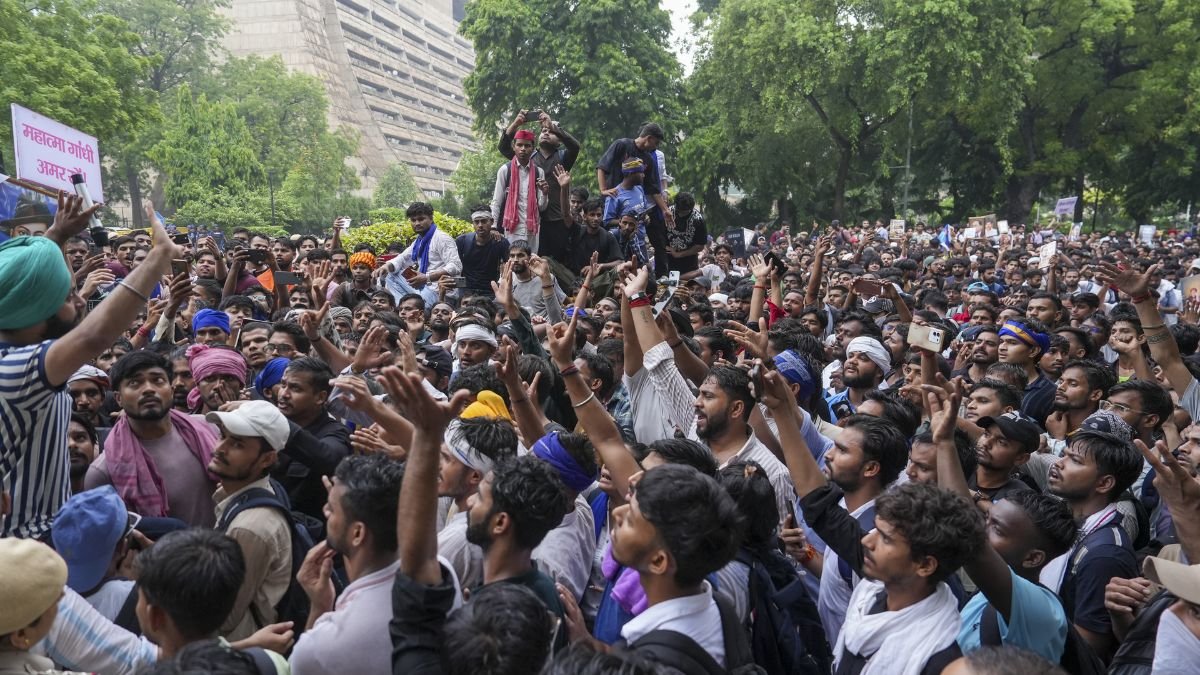
Images of protest have once again become a talking point at Delhi’s Jantar Mantar. Protesters associated with CJP have reoccupied the protest site that had previously been cleared by the administration. This development goes beyond the mere re-establishment of a protest venue; it has become a symbol of democratic rights, peaceful dissent, and the demand for dialogue with the government. All eyes are now fixed on the stance the government will adopt regarding the protesters’ demands.
The Stirrings of Protest Return to Jantar Mantar
Delhi’s Jantar Mantar has long been considered a major hub for democratic protests in the country. Following the administration’s recent move to clear the protest site, it appeared that the momentum of the movement might slow down. However, the protesters returned to the same location and reignited their movement with renewed energy. This sent a clear message that they are unwilling to back down on their demands and will continue to raise their voices peacefully.
What is the protesters’ objective?
Protesters associated with CJP are making persistent efforts to present their various demands to the government. They maintain that the movement will continue until their demands are given serious consideration. The protesters believe that in a democracy, citizens have the full right to voice their opinions and engage in peaceful protest. Exercising this very right, they have reactivated the protest site
Administrative Action Sparks Debate
The administration’s earlier move to clear the protest site has elicited mixed reactions. While some believe the administration had to take this step to maintain law and order, the protesters view it as a curb on their democratic rights. Consequently, the issue has transcended the scope of a mere sit-in protest and has become a subject of debate regarding the balance between administrative authority and civil rights.
The Historical Significance of Jantar Mantar
In India, Jantar Mantar is regarded not merely as a historical monument but also as a symbol of democratic movements. Over the years, numerous social organisations, student groups, farmers, employees, and various civil society groups have raised their voices regarding their demands from this very location. Consequently, any major protest held here becomes a subject of national discussion. This movement by the CJP is also viewed as part of that same tradition.
Why is the wait for the government’s response crucial?
The most critical aspect of this entire movement is the government’s reaction. The protesters seek a clear and positive response to their demands. If the government chooses the path of dialogue, the situation could normalise; however, if there is no response for an extended period, the possibility of the movement intensifying cannot be ruled out. Therefore, the government’s stance in the coming days is considered extremely important.
A message of peaceful protest
The protesters have repeatedly clarified that their movement will remain entirely peaceful. Their objective is not to incite confrontation but to convey their views to the government in a democratic manner. A large number of people remained at the protest site in a disciplined manner, sending a clear message that efforts are being made to keep the movement peaceful. In a democracy, such protests also strengthen citizen participation.
Growing discussion on social media
Following the events at Jantar Mantar, widespread discussion was observed on social media. Many people voiced their support for the protesters, while others justified the administration’s actions. Despite differing opinions, it is evident that the issue has not remained confined to Delhi but has succeeded in capturing the attention of people across the country. Continuous updates are being shared on digital platforms, and people are keeping a close watch on developments.
Political and social impact
The impact of any major protest is not limited to the protest site alone; such movements have repercussions at both political and social levels. Opposition parties often attempt to corner the government on such issues, while social organisations raise concerns regarding the protection of civil rights. This is why the CJP’s protest could well become a subject of political debate in the near future.
What could be the future strategy?
If talks between the government and the protesters begin, the likelihood of a resolution could increase. On the other hand, if the dialogue is delayed, the nature of the movement might change, and more people could join it. The protesters are currently awaiting a response from the government but have also indicated that a future strategy will be formulated if necessary. Therefore, the next few days could play a crucial role in determining the direction of this entire movement.
Conclusion
The resumption of the protest site at Delhi’s Jantar Mantar by CJP protesters is not merely a symbolic gesture; it underscores the significance of democratic rights, dialogue, and civic engagement. The crucial question now is how the government will respond to the protesters’ demands and whether both sides can reach a resolution through dialogue. For the moment, the situation remains peaceful, with all eyes fixed on the government’s next move.
In the coming days, these developments are likely to remain a key topic of political and social discourse, not just in Delhi but across the entire country. The strength of a democracy lies in the ability of citizens to peacefully voice their views and in the government’s willingness to seek solutions through dialogue.





July 7, 2026