
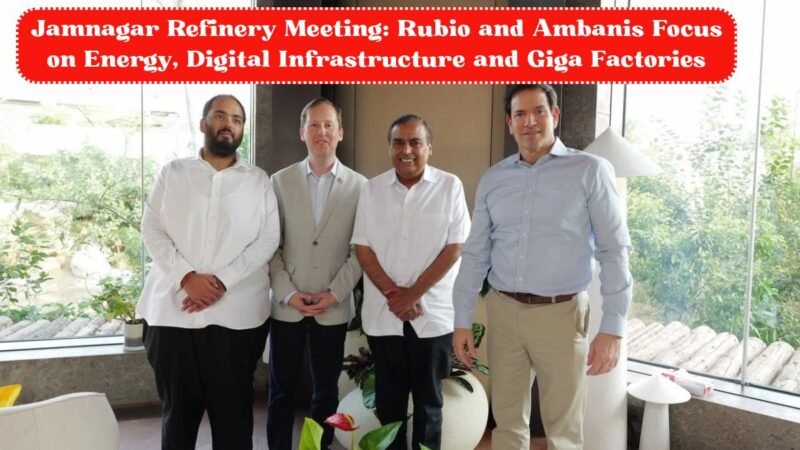
Jamnagar refinery kinda has a special weight in India’s industrial and energy world, you know. Lately, there have been reports about conversations between Rubio and the Ambani family at the Jamnagar refinery , talking about a few big themes like energy, digital infrastructure, and even “giga-factories” . People in the industrial space have been paying close attention, because this isn’t just ordinary small talk. It’s being seen as potentially meaningful for collaboration in the energy sector, also for pushing forward more advanced technology, plus the whole question of large scale industrial projects that could actually move.
Right now, the mix of energy security, digital know-how, and large scale manufacturing is basically the backbone for economic progress in any country. So when discussions like these pop up, they can give a real, practical peek into where industries might be heading and what kind of investment chances could appear.
Why is the Jamnagar refinery significant?
Located in Gujarat, the Jamnagar refinery is one of India’s main industrial hubs, sort of. Reliance Industries’ Jamnagar complex is well-known for its huge refining capacity and an integrated industrial setup, you know. Beyond only producing petroleum products, it takes part in energy related work and other industrial activities, too.
Jamnagar also matters quite a lot outside India, because this industrial area contributes meaningfully to the global energy market. Its operations include crude oil processing, fuel production , and petrochemical manufacturing. Because of that, it becomes a notable player in international commerce.
Senior meetings at a site this major, often end up shaping how people tackle energy-sector obstacles, discuss new technological progress and pin down prospects for further cooperation.
Why are discussions on the energy sector important?
Energy really is, like the backbone of any nations economy, it kinda holds everything together. Every sector—from industry and transportation to agriculture, even household needs—depends on it. And now since global energy demand keeps growing and prices jump around in international markets, energy security is getting more and more important, like urgently.
The refining industry is a key piece of that whole picture. Modern refineries do more than just take crude oil and turn it into petrol, diesel and a bunch of other essential goods. They also feed into wider industrial progress, step by step. When people talk about energy, it is not only traditional fuels anymore, it also includes clean energy, better energy efficiency, and technologies that are meant to satisfy what comes next, the future needs and all that.
For a fast moving developing country like India , having a steady energy supply matters a lot, and so does backing new technology with real investment.
The Growing Importance of Digital Infrastructure
One more key theme, kind of… is digital infrastructure, and honestly the meeting kept coming back to that, over and over. Nowadays, digital technology spreads way beyond just internet or mobile services. It also shows up in industrial production, data management, communications, and basically day to day business operations, so it feels pretty central.
Digital infrastructure, in practice, covers things like data centers, cloud computing, high speed networks, and updated digital systems. These setups allow companies to boost operational efficiency and handle data at a large scale, without too much friction.
In industrial settings, using digital technology helps with machine monitoring, production planning, and the optimized use of resources. That usually translates into the ability to save time and also keep operational costs under control, which is pretty important.
And as the demand for digital services keeps rising across India, the outlook for investments as well as technical collaboration in this area is getting more meaningful, more relevant, really.
Giga-factories as a Foundation for Industrial Growth
Giga-factories are basically huge scale industrial production units, you know, the kind of places where a lot gets made, all at once. The phrase is mainly used when talking about manufacturing facilities for batteries, energy storage, and electric vehicles, but it can also be applied to other big production complexes.
The goal of these factories is to grow manufacturing capacity by tying in modern technology, plus really broad production networks. In the area of battery technology and energy storage, especially, these setups can end up being pretty crucial for covering future energy demands, even if it sounds a bit ambitious at first.
And since demand keeps increasing for electric vehicles, renewable energy, and energy storage systems across India, the importance of large-scale manufacturing plants is getting stronger. Projects like these can create jobs, support supply chains, and help build up technical skills too, sort of like a long-term groundwork. Still, you’d need official information to verify whether any particular “gigafactory” project was truly announced, or actually under construction, because rumors and listings can get mixed.
What are the implications for India’s industrial future?
Energy, digital infrastructure and gigafactories are like three areas that might start to mesh more and more in the coming years, not just side by side. Modern industries need a steady energy supply, reliable digital networks, and also the ability for high scale production to actually happen, you know.
If investment and collaboration really get going across these sectors it could end up strengthening India’s industrial know how. Also it can open the door for ways to push domestic manufacturing, speed up technological invention, and improve competitiveness in global markets.
Still, it’s crucial to sort of tell apart the potential importance of a meeting from what comes out of it. The real specifics about investments, initiatives, and the agreements will only get clearer once the official announcements are released by the parties that are involved.
Conclusion
The talk between Rubio and the Ambani family at the Jamnagar refinery—kinda centered on energy, digital infrastructure, and gigafactories—brings out a few key priorities for India’s industrial future. Energy security, digital tech, and big scale production act as important pillars for the modern worldwide economy. There might be collaboration across those areas, and that could open brand new avenues for India. Still, as of now the specific outcomes of the meeting.