The Ramayana is not merely a religious text or an ancient tale; it is an invaluable treasure trove of Indian culture, traditions, ideals, and life values—one that has inspired people for centuries to follow the right path. Composed by the sage Valmiki, the Ramayana chronicles the life of Lord Rama, his struggles, sacrifices, love, and his unwavering devotion to dharma (righteousness). The narrative teaches us that no matter how difficult the circumstances in life may be, if an individual remains steadfast in their principles and truth, they can attain greatness.
The Birth of Lord Rama in Ayodhya
In the ancient, sacred city of Ayodhya, King Dasharatha reigned. He was a just ruler who deeply cared for his subjects, yet his life felt incomplete due to the absence of children. Following religious traditions, a Putreshti Yajna (a ritual for begetting progeny) was performed, after which four sons were born to him; Lord Rama was the eldest. His birth brought a wave of joy throughout Ayodhya. From childhood, Rama was calm, humble, intelligent, and kind-hearted. He held his parents, teachers, and elders in high regard. Even at a young age, he displayed qualities that would eventually lead him to be revered as Maryada Purushottama—the epitome of righteousness and moral perfection.
Education, Values, and the Dawn of Valor
Lord Rama, along with his brothers, received his education at the ashram of Sage Vashistha. He acquired knowledge of the Vedas, shastras (scriptures), statecraft, the art of warfare, and dharma. He was not only skilled in the use of weaponry but also possessed patience, discipline, and a spirit of service toward others. Later, the sage Vishwamitra took him into the forest, where Rama protected the yajnas (sacrificial rituals) of the sages from the terror of rakshasas (demons). During this period, he demonstrated his valor, courage, and dedication to duty. This was a pivotal event in his life—one that set a new course for his journey toward becoming a legendary hero.
Marriage to Mother Sita: An Exemplar of Love
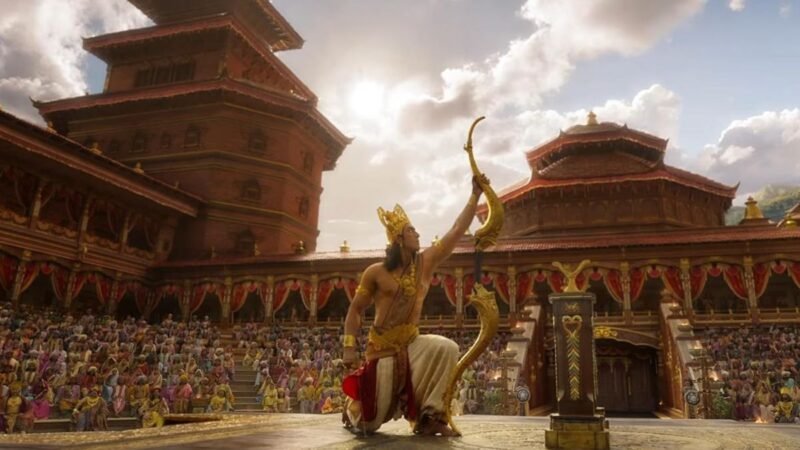
King Janaka of Mithila organized a swayamvara (a ceremony for a bride to choose her husband) for his daughter, Sita. The condition for the marriage was to lift the colossal bow of Lord Shiva and string it. Many powerful kings and warriors failed in this task; however, under the guidance of his guru, Vishvamitra, Lord Rama lifted the bow, and as he attempted to string it, the bow broke. Following this, the marriage of Mother Sita and Lord Rama took place. Their bond was not merely that of husband and wife; it was a profound symbol of love, trust, mutual respect, and a lifelong commitment to stand by one another.
Exile: A Rigorous Test of Sacrifice and Duty
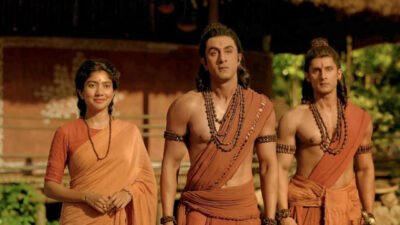
Just as preparations for Lord Rama’s coronation were underway, Queen Kaikeyi invoked two boons she had previously been granted by King Dasharatha: she demanded the throne for her son, Bharata, and a fourteen-year exile in the forest for Lord Rama. To uphold the sanctity of his father’s word, Lord Rama accepted the exile without any protest. Mother Sita and his brother, Lakshmana, also chose to accompany him into the forest. Leaving behind the comforts of the royal palace to live in the wilderness was no easy feat, yet Lord Rama prioritized his duty above all else. To this day, his decision remains a supreme example of sacrifice, obedience, and devotion to family honor.
The Abduction of Mother Sita and Lord Rama’s Struggle
During their exile, Lord Rama, Mother Sita, and Lakshmana were residing in Panchavati. The situation took a turn following an incident involving Shurpanakha, the sister of Ravana. Ravana deceitfully abducted Mother Sita and took her to Lanka. Upon learning of this, Lord Rama was plunged into deep sorrow, yet he did not lose heart. In his quest to find Mother Sita, he traversed forests, mountains, and many arduous paths. During this journey, he encountered Hanuman and Sugriva, who pledged their support to him.
The Remarkable Contribution of Hanuman and the Vanara Army
Hanuman’s contribution to Lord Rama’s journey was of immense significance. He displayed extraordinary courage by crossing the ocean to reach Lanka in search of Mother Sita. In the Ashoka Vatika, he presented Mother Sita with Lord Rama’s ring, conveying the message that Rama was alive and well. Subsequently, he demonstrated his valor in Lanka before returning to inform Lord Rama of Mother Sita’s whereabouts. Sugriva and the Vanara army (monkey army) also extended their full support to Lord Rama. This episode teaches us that through true friendship, trust, and dedication, even tasks that appear impossible can be accomplished.
The War in Lanka and the Triumph of Righteousness over Unrighteousness
To bring Mother Sita back, Lord Rama and his army constructed a bridge across the ocean and set out for Lanka. A fierce battle ensued between Lord Rama and Ravana. Although Ravana was exceptionally powerful, learned, and mighty, his arrogance and unrighteous conduct led to his downfall. During the conflict, Lakshmana, Hanuman, Sugriva, and other warriors displayed remarkable bravery. Ultimately, Lord Rama slew Ravana and secured the liberation of Mother Sita. This victory was not merely the conclusion of a war; it became a testament to the power of truth, justice, and righteousness (dharma).
Return to Ayodhya and the Establishment of Ramrajya
After completing fourteen years of exile, Lord Rama, Mother Sita, and Lakshmana returned to Ayodhya. To celebrate their arrival, the entire city was adorned with lamps, and the people welcomed them by lighting these lamps—a tradition now associated with the festival of Diwali. Upon his return to Ayodhya, Lord Rama was crowned king, and he established an ideal form of governance known as ‘Ramrajya.’ Ramrajya is considered a symbol of justice, peace, equality, prosperity, and the well-being of the subjects. In this system, the primary duty of the king was to serve and protect his people.
The Eternal Legacy and Life Lessons of Lord Rama
The story of Lord Rama teaches us that true greatness is not derived from power, wealth, or status, but from good character, truthfulness, patience, and respect for others. Throughout his life, he faced numerous challenges, yet he never strayed from the path of dharma (righteousness) and maryada (moral conduct). Even today, his life serves as a source of inspiration for millions. The message of the Ramayana has not faded with time; rather, it remains equally significant for every generation. This glorious saga of Lord Rama reminds us that, no matter how difficult the circumstances may be, the path of truth and righteousness ultimately remains the greatest path of all.