
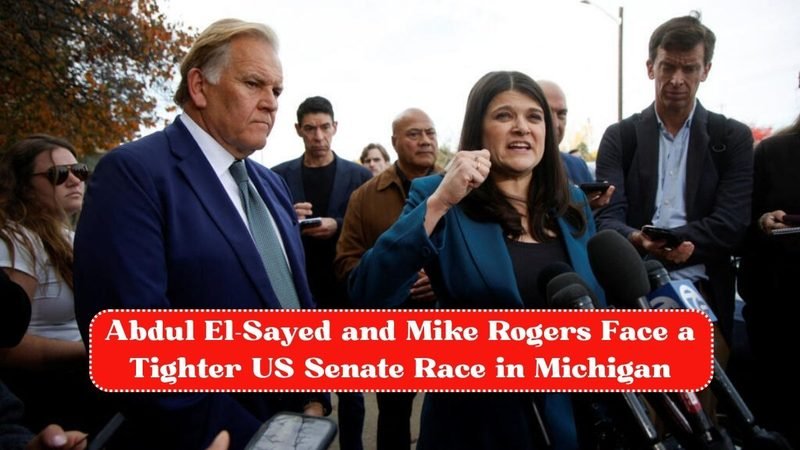
The political landscape surrounding the U.S. Senate election in Michigan is becoming increasingly intriguing. The contest between Abdul El-Sayed and Mike Rogers appears to be tightening, with both candidates facing the challenge of securing voter support. This election is drawing attention not only from the people of Michigan but is also being viewed as a significant political battle on the national stage. Shifting political dynamics, evolving voter priorities, and the distinct strategies of both candidates are fueling further discussion around this race.
Intensifying Political Activity in the Michigan Senate Race
The U.S. Senate race in Michigan is proving to be more competitive than before. The political showdown between Abdul El-Sayed and Mike Rogers has intensified the electoral discourse. Both candidates are seeking to attract voters by leveraging their respective political identities and ideologies. As the election progresses, public interest in this contest continues to grow.
Focus on Abdul El-Sayed’s Candidacy
Abdul El-Sayed is a well-known figure in Michigan politics, and his candidacy has become a subject of discussion among political analysts and voters alike. His supporters look to him to take a firm stance on issues that directly impact the daily lives of ordinary citizens. Topics such as healthcare, education, employment, and the economic well-being of families are likely to play a pivotal role in the electoral debate.
A Major Political Challenge for Mike Rogers
Mike Rogers is also working to strengthen his position in this electoral contest. His political experience and his standing among his supporters serve as key components of his campaign strategy. His primary challenge lies in maintaining the trust of voters and reaching out to those who have yet to decide which candidate to support.
Evolving Voter Sentiment Emerges as a Key Issue
In any election, the sentiment of the voters is of paramount importance. In Michigan, voters may base their choices on a variety of different issues. For some, inflation and employment are the primary concerns, while others may prioritize healthcare, social policies, or economic stability. These diverse priorities could significantly impact the electoral prospects of both candidates.
Sharp Focus on the Economy and Inflation
The economy is likely to be a critical election topic for voters in Michigan. Issues such as the cost of everyday goods, household budgets, job opportunities, and the health of small businesses can all influence how people decide to vote. It will be essential for both candidates to clearly articulate their plans and priorities regarding these economic challenges.
The Role of Employment and the Automotive Industry
Michigan has long been a vital hub for the American automotive industry. Automotive companies, manufacturing plants, and the jobs associated with them make a substantial contribution to the state’s economy. Consequently, topics such as industrial development, labor rights, emerging technologies, and the future of electric vehicles are likely to feature in the electoral discourse. Voters will be keen to understand what policies each candidate supports to expand employment opportunities within the state.
Healthcare and Education in the Electoral Spotlight
Issues concerning healthcare and education are also poised to be significant in this election. Citizens desire better medical facilities, affordable treatment, and access to quality education—concerns that are particularly crucial for middle-class and low-income families. The policies and proposals put forward by the candidates in these areas could shape how they are perceived by the electorate.
Intensifying Competition in Campaign Strategy
As the contest between the two candidates grows increasingly tight, the importance of electoral strategy continues to rise. Public rallies, grassroots campaigning, media outreach, and direct engagement with voters are all set to be vital components of the election campaigns. Both candidates will need to adopt effective strategies to reach out to diverse communities and regions. Securing the support of smaller voter blocs could also prove crucial in this contest.
Potential Impact on National Politics
The U.S. Senate race in Michigan carries significance that extends well beyond the state. The political balance within the U.S. Senate influences national policies, legislation, and government decisions. Consequently, this contest in Michigan is being closely watched by national political parties and political analysts. Should the race remain tight, it could gain even greater prominence in the national political discourse.
All Eyes on the Contest Between Abdul El-Sayed and Mike Rogers
The intensifying race between Abdul El-Sayed and Mike Rogers for Michigan’s U.S. Senate seat is poised to become increasingly compelling. For both candidates, earning the trust of the electorate will be the top priority. Issues such as the economy, employment, healthcare, and the state’s industrial future are likely to shape the electoral debate. It is too early to predict the final outcome of this contest; however, it is clear that this Michigan Senate race holds a significant place in American politics, and all eyes will remain fixed on how the electoral landscape unfolds.