
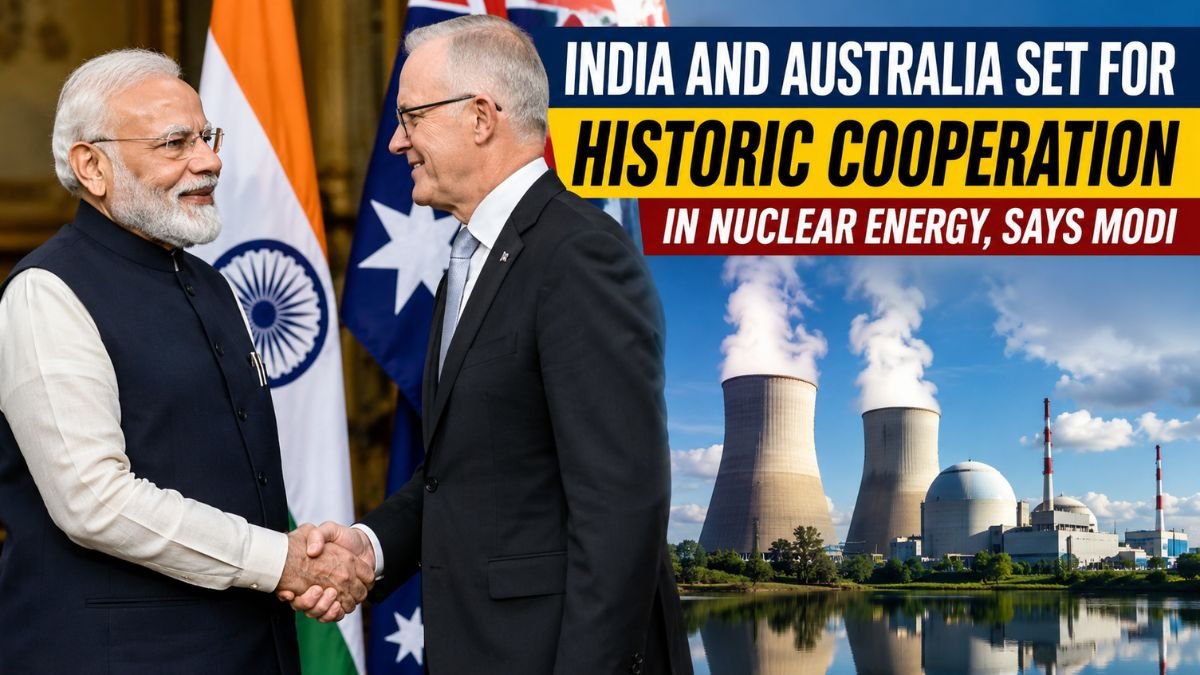
Relations between India and Australia are consistently scaling new heights. Recently, Prime Minister Narendra Modi emphasized the need for historic cooperation between the two nations in the fields of nuclear energy and critical minerals. He believes that in the coming years, this partnership will strengthen the economies of both countries and play a pivotal role in global energy security and the future of clean energy.
A New Chapter in India-Australia Relations
Over the past few years, India and Australia have forged strong ties in sectors such as trade, defense, and education. Now, cooperation in nuclear energy and critical minerals Now, experts view cooperation in nuclear energy and critical minerals as a significant advancement in elevating this partnership. as a major step toward taking this partnership to a new level.
Why Has Nuclear Energy Become a Priority?
The world is rapidly moving towards clean and sustainable energy. In this context, nuclear energy is considered an effective option for reducing carbon emissions. India aims to expand its nuclear energy capacity to meet its growing energy needs, while Australia possesses significant resources and expertise in this sector.
The Growing Importance of Critical Minerals
Lithium, cobalt, and rare minerals play a crucial role in the manufacturing of electric vehicles, solar panels, batteries, and modern electronic devices. Australia is a major producer of these minerals, and India views them as vital for boosting its manufacturing capabilities.
What Are the Benefits for Both Nations?
If this cooperation strengthens, India will gain energy security, technical collaboration, and a stable supply of essential minerals. Meanwhile, Australia will secure access to a vast market like India and a long-term trade partner. This could accelerate economic progress in both countries.
Support for Clean Energy Goals
India has set targets to reduce carbon emissions and adopt clean energy in the coming years. Cooperation in nuclear energy and critical minerals can play a significant role in achieving these goals. It will also provide a boost to green energy projects.
Strategic Partnership in the Indo-Pacific Region
India and Australia are already key strategic partners in the Indo-Pacific region. Growing cooperation in the energy and minerals sectors will also strengthen regional stability, supply chain resilience, and economic security.
New Opportunities for Investment and Employment
Increased cooperation between the two nations could boost investment in mining, energy, research, and new technologies. This will create opportunities for new companies and potentially generate thousands of direct and indirect jobs.
Boost to Technology and Innovation
The exchange of modern technologies in the fields of nuclear energy and mineral processing will be mutually beneficial. It will also provide a new impetus to research, scientific development, and advanced industrial technologies.
Enhanced Role in Global Energy Security
The world is currently grappling with energy crises and supply chain challenges. In this context, the partnership between India and Australia can play a pivotal role in ensuring reliable energy and mineral supplies on a global scale.
The Way Forward and Prospects
Prime Minister Modi’s message reflects not merely a diplomatic statement but a strategic vision for the future. If both nations take concrete steps in this direction, this collaboration could evolve into one of the most significant energy partnerships in the Asia-Pacific region in the coming years. It holds immense potential to deliver long-term benefits to both countries in terms of economic growth, technological advancement, and clean energy.
Conclusion
The potential collaboration between India and Australia regarding nuclear energy and critical minerals Experts view the potential collaboration between India and Australia on nuclear energy and critical minerals as a visionary initiative that addresses future needs. This partnership will not only strengthen the energy security and economic growth of both nations but also create new opportunities for clean energy and sustainable development globally. The world will be watching closely the trajectory of this cooperation and the announcements associated with it in the times ahead.






July 7, 2026