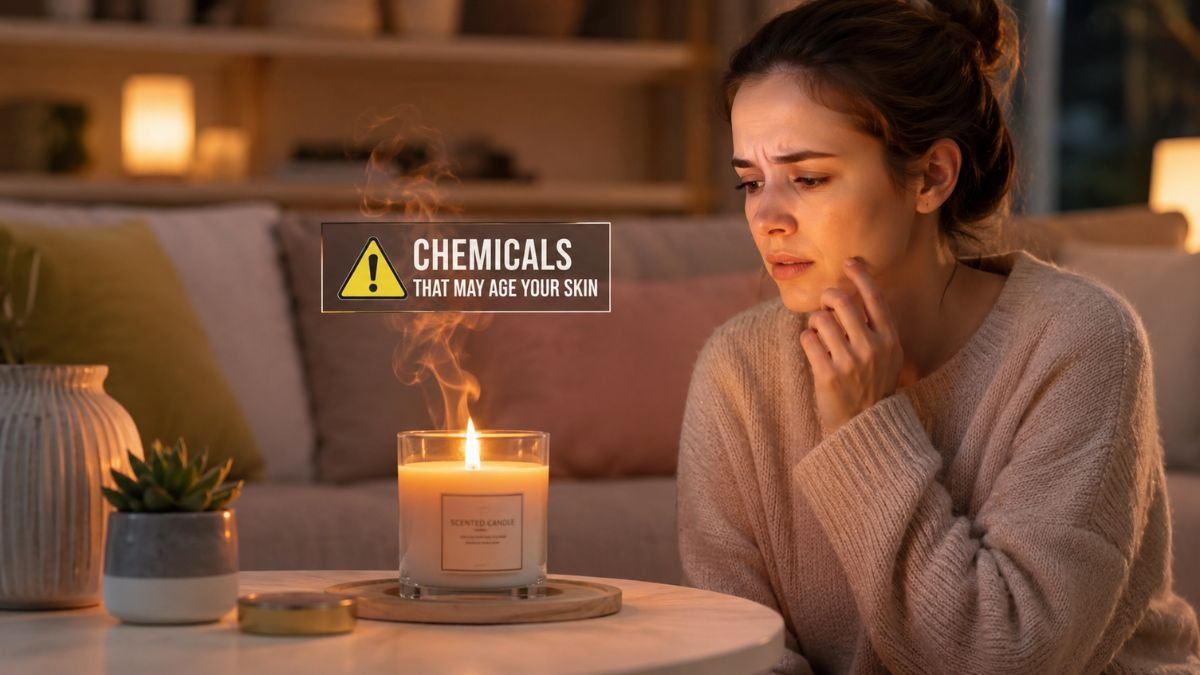
Lighting scented candles to fill the home with a subtle fragrance has become quite common these days. People buy various types of candles to create a pleasant aroma, a relaxing atmosphere, and a touch of luxury. However, have you ever considered that these beautifully scented candles can also release chemicals into the air around you—chemicals that, with prolonged exposure, could affect your skin health?
This topic warrants attention, especially given how much emphasis we place on skincare while often overlooking the air quality in our homes and the fragrance products we use. That said, it would be incorrect to label every scented candle as harmful; factors such as the candle’s quality, ingredients, fragrance, and usage habits play a significant role.
Not all scented candles are the same
First, it is important to understand that not all candles available on the market have the same composition. Some use paraffin wax, while others are made from soy wax, beeswax, or other wax blends. Similarly, the fragrances used can also vary widely.
It is best to exercise caution when buying low-priced candles or those that lack ingredient information. Choosing a candle solely based on attractive packaging or a strong scent is not the right approach. If the manufacturer has clearly listed the ingredients and fragrance details, it is a positive sign.
Why are questions raised about paraffin wax?
Paraffin wax is derived from petroleum refining and has long been used in scented candles. When a candle burns, the combustion process can release particulate matter and other by-products into the air.
This is why paraffin candles are often discussed in the context of indoor air quality. However, this does not mean that lighting a paraffin candle once or twice will cause your skin to age prematurely. The real concern arises from factors such as prolonged, frequent exposure and the level of ventilation in the room.
Fragrance chemicals also deserve attention
The fragrance is often the defining feature of many scented candles. Scents like vanilla, lavender, rose, sandalwood, or citrus make them appealing. However, various chemical compounds can be used in fragrance formulations.
Some fragrance compounds can exist in the air as volatile organic compounds, or VOCs. Their impact can vary depending on the individual, the concentration, and the duration of exposure. Therefore, it is wise to avoid burning strongly scented candles for extended periods in small, enclosed rooms.
What is the link to skin aging?
Now, the most important question—how exactly could these candles be linked to skin aging?
Several factors play a role in skin aging, including oxidative stress, inflammation, UV exposure, pollution, and lifestyle. Indoor air pollution is also part of one’s overall environmental exposure. Certain airborne pollutants can increase oxidative stress in the body, which could theoretically affect skin health.
However, claiming that burning a specific candle will directly cause wrinkles or premature aging is not a scientifically robust conclusion. Therefore, when interpreting such headlines, it is better to view this as a potential concern rather than a proven cause.
Burning a candle in an enclosed room is a more significant issue
Burning a candle for a short time in an open or well-ventilated room can help keep the concentration of airborne pollutants low. Conversely, burning a candle for hours in a small room with windows and ventilation closed creates a different scenario.
Thus, how a candle is used is just as important as the type of candle itself. Ensuring fresh air circulation while the candle is burning can help minimize indoor exposure.
A very strong fragrance isn’t always better
Many people believe that the stronger the fragrance, the more premium the candle. However, this is not necessarily true. An overpowering fragrance can cause headaches, irritation, or discomfort for some people.
If a candle releases an intensely pungent odor as soon as it is lit, it is better to use it for a shorter duration rather than burning it for a long time. This is particularly important to consider in bedrooms or small, enclosed spaces.
The wick is also a crucial part of the candle
When choosing a candle, people often focus only on the wax and fragrance, but the wick is also important. A poorly made or improperly used wick can produce excessive soot.
If the candle flame is too large and emits black smoke, it indicates that the wick may need trimming or that the candle should no longer be used. Generally, it is best to keep the wick trimmed according to the manufacturer’s instructions; this helps maintain a more controlled flame and reduces soot production.
Are soy and beeswax candles completely safe?
Soy wax and beeswax candles are often preferred as alternatives to paraffin. However, simply looking at the type of wax used isn’t enough to deem a candle completely “chemical-free” or “100% safe.”
This is because a candle’s total emissions depend on more than just the wax; factors like fragrance, the wick, additives, and burning conditions also play a role. Consequently, even soy candles produce combustion byproducts when burned.
A better approach is to choose high-quality candles with transparent ingredient labeling and use them for limited periods in well-ventilated areas.
What should you check when buying a candle?
Next time you buy a candle, don’t focus solely on its scent and design. First, check if the product clearly lists the manufacturer and ingredients.
It is best to avoid candles if the fragrance is overpowering, the labeling is unclear, or the candle produces excessive, persistent soot while burning. Purchasing from certified or reputable brands is also a practical step.
Additionally, keep candles away from curtains, bedding, and other flammable items. While this relates more directly to fire safety than skin health, it is a precaution that should not be overlooked when using candles.
The simplest solution: shorter burn times and better ventilation
If you enjoy scented candles, there is no need to give them up entirely. Moderation is the most practical approach. Instead of burning a candle continuously for long periods, use it for a limited time. Ensure the room is well-ventilated, extinguish the candle if you notice excessive smoke or soot, and opt for high-quality products.
At the same time, it is far more important to focus on major, well-established factors that contribute to skin aging—such as UV radiation from the sun, smoking, poor sleep, and overall lifestyle. Daily sunscreen use, adequate sleep, a balanced diet, and avoiding smoking are much more critical steps in skincare.
Quick Review: Should you give up scented candles?
No, not necessarily. It is better to view this topic through the lens of awareness rather than fear. When using scented candles, it is wise to pay attention to product quality, fragrance strength, the wick, ventilation, and the duration of burning. Most importantly, it would be incorrect to attribute skin aging solely to the use of a candle. Skin aging is a complex process influenced by various factors, including genetics, sunlight, pollution, lifestyle, and age.
If you enjoy burning candles at home, opt for high-quality products, ensure good air circulation in the room, and avoid burning them for excessively long periods. Exercising a little caution while enjoying the pleasant fragrance is the most balanced approach in this regard.