The dispute between India and China regarding Arunachal Pradesh is not new. For a long time, China has laid claim to various parts of this Indian state and has periodically attempted to rename locations or issue new names for them. India has consistently rejected these claims and clarified that Arunachal Pradesh is an integral part of the country. Now, news of India granting official recognition to 27 locations has once again brought this long-standing dispute into the spotlight.
Why is Arunachal Pradesh so important?
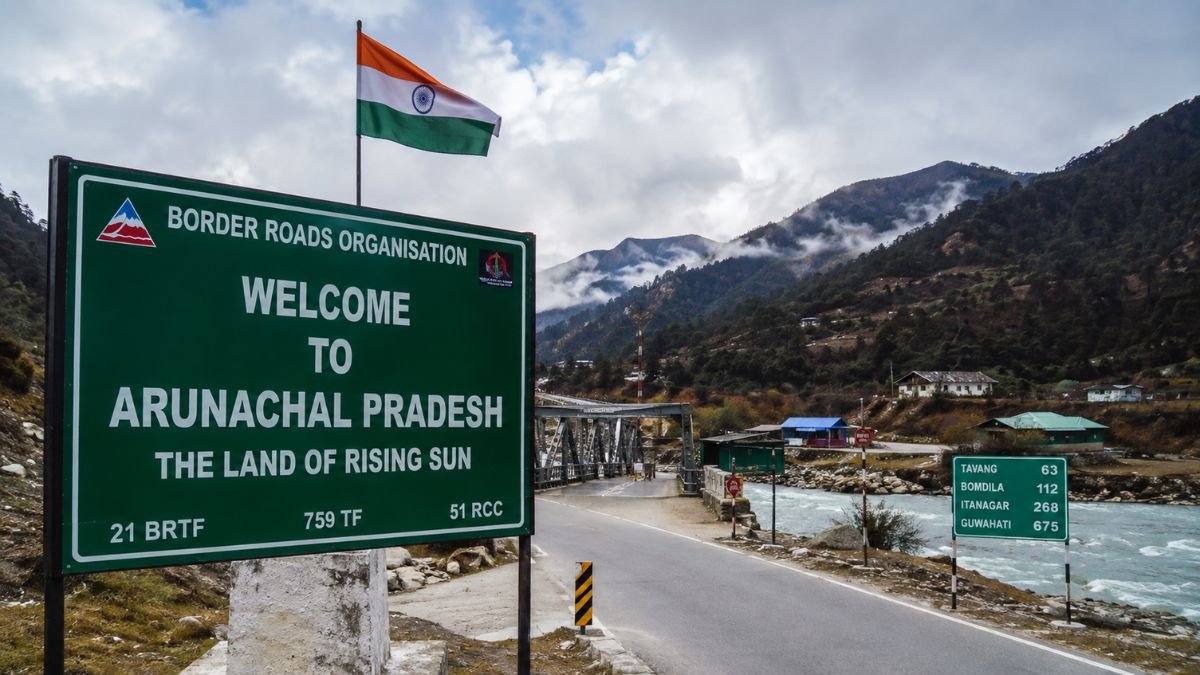
Arunachal Pradesh is a strategically vital state located in India’s northeast. It shares a long border with China, which is why the region has remained at the heart of the India-China border dispute. China claims Arunachal Pradesh as part of South Tibet, a claim India categorically rejects.
For India, Arunachal Pradesh is not just a border region. Its population, local administration, road networks, military infrastructure, and socio-cultural identity make it immensely important to the country. Consequently, any activity concerning this region gains strategic and political significance.
What does the official recognition of 27 locations signify?
The official recognition of these 27 locations should primarily be understood as an administrative and record-keeping measure. A location’s official name and identity play a crucial role in government records, maps, administrative documents, and public usage.
By granting such recognition, India conveys the message that these locations are viewed as integral parts of the Indian administrative system. While merely assigning names does not constitute a final resolution to the border dispute, it clarifies the government’s stance and administrative perspective regarding the region.
India’s response amidst China’s renaming policy
China has previously released its names for several locations in Arunachal Pradesh. Beijing argues that the names it assigns reflect its claim over the territory. India has consistently rejected such attempts, stating that renaming a place does not alter the ground reality.
In this context, India’s official recognition of these 27 locations can be viewed as a form of institutional response. It is a direct assertion that a claim over a territory cannot be established merely through the process of renaming.
What is India’s key message?
The primary message from this entire development is that India is not altering its stance on Arunachal Pradesh. New Delhi has long insisted that Arunachal Pradesh is part of India and that China’s claims don’t change this. Officially recognizing these 27 locations reinforces the message that India intends to assert its administrative authority and territorial claims robustly. This can also be seen as a quiet yet clear diplomatic signal.
Will this resolve the India-China border dispute?
Put simply, the official recognition of 27 locations alone will not resolve the India-China border dispute. The two nations have differences regarding the border at multiple levels. A genuine resolution requires addressing various aspects, such as dialogue, border management, de-escalation of military tensions, and mutual understanding.
While renaming and official recognition can clarify a country’s position, the ultimate resolution of a border dispute involves a different process. Therefore, it is more appropriate to view this move as a step towards strengthening India’s position rather than a resolution to the dispute itself.
What is its significance for the local people?
For the residents of Arunachal Pradesh, place names are not merely words on a map. A location’s local identity is deeply intertwined with its history, culture, language, and the communities inhabiting it. Official recognition of these places can also impact local administration and record-keeping systems. Granting official recognition by India could reinforce the local perception that the administration of these regions falls under the Indian system. However, respecting the historical and cultural identities of local communities remains equally important in this process.
Strategic Significance of Arunachal Pradesh
The geographical location of Arunachal Pradesh accords it a special place in India’s security policy. A large part of the state is mountainous, and the border shared with China is considered sensitive. In recent years, India has focused on strengthening roads, bridges, and other infrastructure in these border areas.
Potential Impact on India-China Relations
Relations between India and China are already navigating numerous challenges. Beyond the border dispute, issues such as trade, security, and regional influence also shape the relationship between the two nations. Rhetoric concerning Arunachal Pradesh could exacerbate tensions in these ties.
Nevertheless, this move by India does not directly signal a military confrontation. It can largely be viewed as an effort to assert its position at administrative and diplomatic levels. The subsequent reactions from both nations will determine the extent to which this issue evolves into a major political dispute.
Does changing names alter the situation on the ground?
This is the most crucial question in the entire dispute. In international politics, assigning a new name to a location does not, in itself, establish sovereignty over that territory. Factors such as actual administration on the ground, international agreements, historical claims, and border demarcation play significant roles.
For this reason, India has consistently maintained that China’s renaming of locations in Arunachal Pradesh does not alter the state’s actual status. India’s move to grant official recognition to these 27 locations can also be understood within this broader context.
What remains to be seen?
Attention will now focus on how China reacts to these developments and how India shapes its future strategy. It remains to be seen whether the rhetoric between the two nations escalates or if tensions are managed through border negotiations.
For now, the official recognition of these 27 locations can be seen as a clear administrative and diplomatic message from India. The objective is not merely to record place names but to reiterate India’s established position regarding Arunachal Pradesh.
Conclusion
The dispute between India and China over Arunachal Pradesh is not simply a matter of boundaries drawn on a map. Underlying it are major issues concerning history, strategy, local identity, and the national security of both nations. While granting official recognition to t
hese 27 locations is certainly a significant development, it would be premature to view it as a final resolution to the border dispute.For India, this step serves as a means to clarify its administrative stance and territorial claims, whereas China will likely view it through the lens of its own claims. In the coming days, official reactions from both countries and border-related talks will further clarify the true significance of this development.