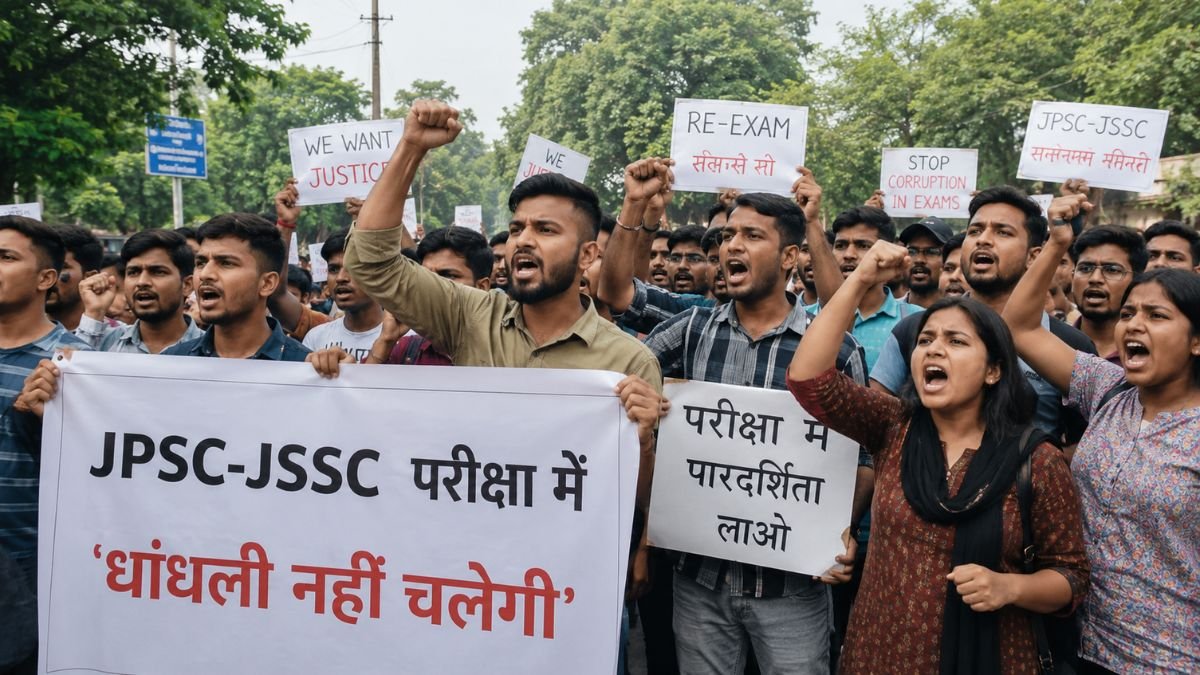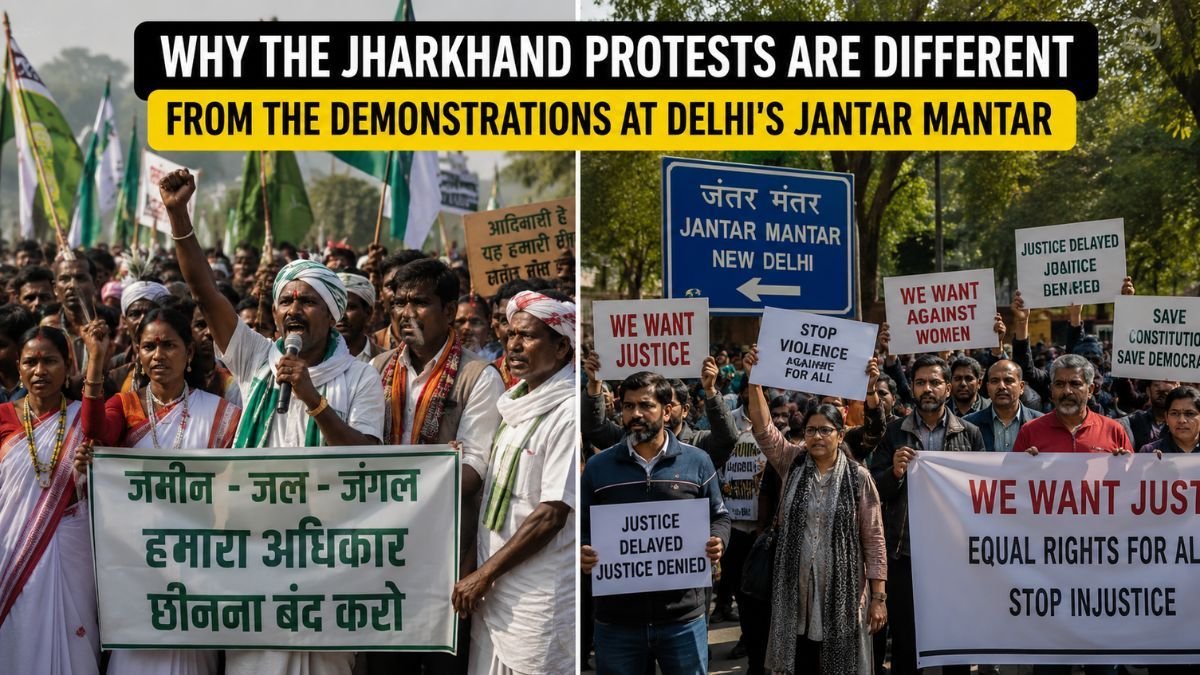
Protests are a vital part of democracy in India. The objectives, nature, and impact of movements vary across different states and regions. In recent years, comparisons have often been drawn between protests in Jharkhand and those held at Jantar Mantar in Delhi. While both appear to be examples of democratic protest at first glance, the underlying circumstances, demands, participation, and impact differ significantly.
Primary Objective of the Protest
Most protests in Jharkhand are linked to local issues. Key themes include tribal rights, land acquisition, mining projects, employment, forest rights, and the protection of local resources. In contrast, people from across the country arrive at Jantar Mantar in Delhi with their respective demands. Protests here often focus on national-level social, political, economic, and administrative issues.
Local vs. National Issues
The scope of movements in Jharkhand is primarily limited to the state and local communities. They are directly connected to the lives, culture, and livelihoods of the local people. Conversely, protests at Jantar Mantar often serve as a platform to highlight national policies, laws, government decisions, or issues concerning various states. This is why the sphere of influence for these two types of movements differs.
Participants in the Protest
Local villagers, tribal communities, farmers, laborers, students, and regional organizations participate in large numbers in Jharkhand’s protests. Their involvement is directly linked to their lives and rights. Meanwhile, at Jantar Mantar, social organizations, employee unions, student groups, women’s organizations, political activists, and civil society representatives from various states come together to convey their demands to the government.
Role of Cultural Identity
Local culture and tribal traditions are clearly reflected in the movements in Jharkhand. Traditional attire, folk songs, drums, and cultural symbols form an integral part of these demonstrations. In contrast, protests at Jantar Mantar tend to be more formal and diverse in nature, with people from various states and communities participating while retaining their distinct identities.
Channels of reaching the government
In Jharkhand, protesters typically present their demands to the state government, district administration, and local officials. Conversely, protests held at Jantar Mantar in Delhi aim to draw the direct attention of the central government, Parliament, and national-level policymakers. Consequently, the level and process of dialogue differ between the two locations.
Differences in media coverage
As Delhi is the national capital, protests at Jantar Mantar quickly make headlines in the national media. News channels, digital media outlets, and national newspapers provide extensive coverage of these events. On the other hand, many local movements in Jharkhand are initially confined to regional media coverage. However, if an issue escalates significantly, it begins to attract national attention.
Nature and organization of protests
Protests in Jharkhand are often organized in villages, at district headquarters, during public meetings, or at local sit-in venues. These events may include public gatherings, rallies, and cultural programs. Meanwhile, Jantar Mantar has long been regarded as a prominent site for peaceful sit-ins and organized protests, conducted in accordance with administrative regulations.
Impact and resolution of demands
Movements in Jharkhand often aim for changes in local policies, compensation, employment, land rights, or revisions to administrative decisions. Conversely, demands raised at Jantar Mantar frequently relate to national laws, government schemes, or broad policy changes. Therefore, the processes for resolving these movements also operate at different levels.
Social and political impact
Protests in Jharkhand can significantly influence state politics, local elections, and regional policies. Meanwhile, protests held at Jantar Mantar often spark national debates and become topics of discussion within Parliament, among political parties, and across the entire country. Consequently, the political impact of these two types of movements is observed at different levels.
Equal Importance in a Democracy
Although the protests in Jharkhand and those at Delhi’s Jantar Mantar differ in several respects, both play an equally vital role in a democratic system. Both provide citizens with an opportunity to voice their views and serve as a medium to convey public sentiment to the government. The strength of a democracy lies in ensuring that the voices of the people are heard at both local and national levels and that their issues are resolved through dialogue and constitutional processes.
Conclusion
While the protests in Jharkhand and the agitations at Delhi’s Jantar Mantar may both be part of the democratic tradition of dissent, there are clear differences in their nature, objectives, participation, cultural identity, and impact. Movements in Jharkhand are more closely linked to local communities, resources, and regional rights, whereas Jantar Mantar is regarded as a prominent platform for highlighting national-level issues. When comparing the two, it is essential to understand that each movement holds distinct significance within its own social, political, and geographical context. The success of democracy lies in ensuring that every citizen and community has the opportunity to voice their views in a peaceful and constitutional manner.