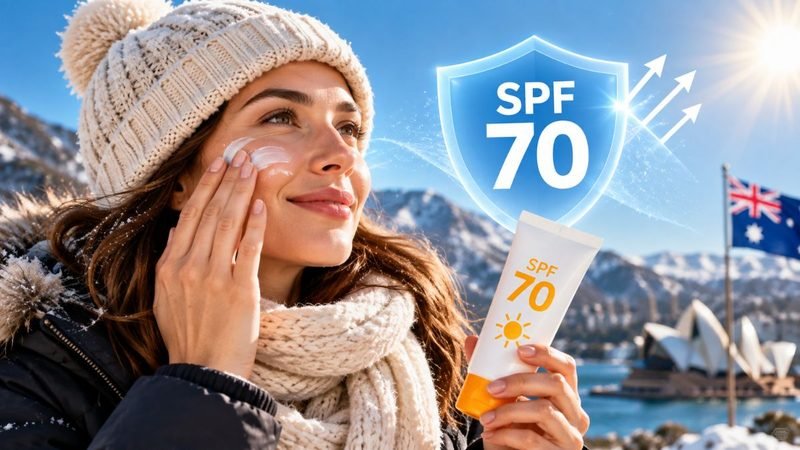
Winter often gives people the impression that sunscreen can be pushed to the bottom of the skincare routine. Cooler temperatures, cloudy mornings, and shorter days can make the sun feel much less intense than it does during summer. However, Australian skin experts continue to emphasize that UV exposure does not simply disappear when temperatures fall. This is one reason higher-SPF sunscreens, including SPF 70 products, are attracting attention among people who want stronger everyday protection. Here is a quick review of why SPF 70 is becoming part of the winter skincare conversation.
Winter Does Not Switch Off UV Exposure
One of the biggest misunderstandings about winter skincare is that cooler weather automatically means less UV exposure. Temperature and ultraviolet radiation are two different things. You can have a chilly day while still receiving significant UV exposure, particularly when spending time outdoors. UVA rays can also contribute to premature skin aging and can reach the skin throughout the year. This makes daily sun protection relevant beyond the traditional summer months, especially for people who regularly commute, exercise outdoors, or spend long periods near windows.
SPF 70 Offers High-Level UVB Protection
The SPF number primarily describes protection against UVB radiation, which is strongly associated with sunburn and contributes to skin damage. SPF 70 is considered very high protection and can provide a little more UVB protection than SPF 50 when the product is properly applied. However, the difference should not be misunderstood as SPF 70 providing 70 times more protection than no sunscreen. The jump from one SPF level to another is not linear. Proper application, adequate coverage, and reapplication are still essential regardless of the number printed on the bottle.
Australian Conditions Make Sun Protection a Serious Topic
Australia has long placed a strong emphasis on sun protection because many parts of the country experience substantial UV exposure. Australian skincare advice commonly focuses on habits such as using sunscreen, wearing protective clothing, seeking shade, and using hats and sunglasses. This wider approach matters because sunscreen is only one part of an effective sun-protection routine. The growing interest in SPF 70 reflects a broader awareness that protecting skin from UV radiation should be an everyday habit rather than something reserved for beach trips and hot summer afternoons.
Cloudy Skies Can Create a False Sense of Security
A grey winter morning can make the sun seem harmless, but clouds do not completely eliminate UV radiation. People may therefore skip sunscreen because they do not feel heat or see strong sunlight. This is particularly relevant when the UV Index is high enough to cause meaningful exposure. Instead of judging the need for sunscreen by temperature or how bright the sky looks, checking the local UV Index can provide a more useful indication of UV risk. This simple habit can help people make better decisions about daily sun protection.
SPF 70 Can Be Useful for People Who Want Extra Protection
For someone who is particularly focused on minimizing UVB exposure, SPF 70 may provide an additional margin of protection compared with SPF 30 or SPF 50. This can be appealing to people who spend considerable time outside or who are trying to maintain a consistent anti-aging skincare routine. Still, a higher SPF should not create a false sense of security. Applying a thin layer of SPF 70 once in the morning and then spending hours outside does not guarantee continuous protection. The amount used and the timing of reapplication matter just as much as the SPF rating.
UVA Protection Still Matters
When choosing sunscreen, SPF should not be the only number people look at. SPF mainly communicates the level of protection against UVB, while UVA radiation also plays an important role in long-term skin damage and photoaging. A broad-spectrum sunscreen is therefore an important choice because it is designed to provide protection against both UVA and UVB radiation. For a winter routine, selecting a high-SPF, broad-spectrum product can make more sense than focusing exclusively on the SPF number printed on the front of the package.
Winter Skincare Needs More Than Sunscreen
Cold weather can leave skin feeling dry, tight, or uncomfortable, particularly when combined with indoor heating and low humidity. This means a winter sunscreen should ideally fit comfortably into a moisturizing skincare routine. People with dry skin may prefer sunscreen formulas that contain moisturizing ingredients, while those with oily or combination skin may prefer lighter textures. The best sunscreen is often the one that feels comfortable enough to use consistently. If a formula feels heavy, greasy, or irritating, people may be less likely to apply enough of it.
Application Can Matter More Than the SPF Number
A common mistake is assuming that choosing SPF 70 automatically solves every sun-protection problem. In reality, sunscreen needs to be applied generously and evenly to exposed skin. Areas such as the ears, neck, hands, and hairline can easily be forgotten. Sunscreen can also wear away through sweating, swimming, rubbing, or simply over time. Reapplication is especially important during extended outdoor activities. In other words, SPF 70 can be useful, but correct application is what allows the product to deliver the protection indicated by its testing.
Winter Sun Protection Is About Long-Term Skin Care
Sun protection is not only about avoiding an uncomfortable sunburn. Repeated UV exposure contributes to cumulative skin damage and can accelerate visible signs of aging, including uneven pigmentation, fine lines, and changes in skin texture. This is why sunscreen has become such a common recommendation in preventative skincare. Using sunscreen consistently throughout the year can be viewed as a long-term investment in skin health rather than a seasonal beauty step. For people who already use moisturizers, serums, or other skincare products, sunscreen can be the final daytime layer.
SPF 70 Is Not a Replacement for Smart Sun Habits
The most important takeaway is that SPF 70 should be viewed as one part of a broader sun-protection strategy. Wearing a wide-brimmed hat, using sunglasses, seeking shade when UV levels are high, and covering exposed skin can all reduce direct UV exposure. Sunscreen becomes particularly useful for areas that cannot easily be covered, such as the face, neck, and hands. Rather than relying on a high SPF number alone, combining sunscreen with practical protective habits provides a more complete approach to everyday UV protection.
Final Quick Review
The growing interest in SPF 70 during winter highlights a simple point: UV protection is not only a summer concern. Cooler temperatures can make the sun feel less intense, but they do not automatically remove ultraviolet exposure. A high-SPF, broad-spectrum sunscreen can be a useful addition to a daily routine, especially for people who spend time outdoors or want to take a consistent approach to protecting their skin.
At the same time, SPF 70 should not be treated as a magic shield. Applying enough sunscreen, covering all exposed areas, reapplying when necessary, and using hats, clothing, sunglasses, and shade are all important. The biggest benefit comes from consistency. Whether the day is hot and sunny or cool and cloudy, paying attention to UV exposure can help make winter skincare more protective and better suited to long-term skin health.