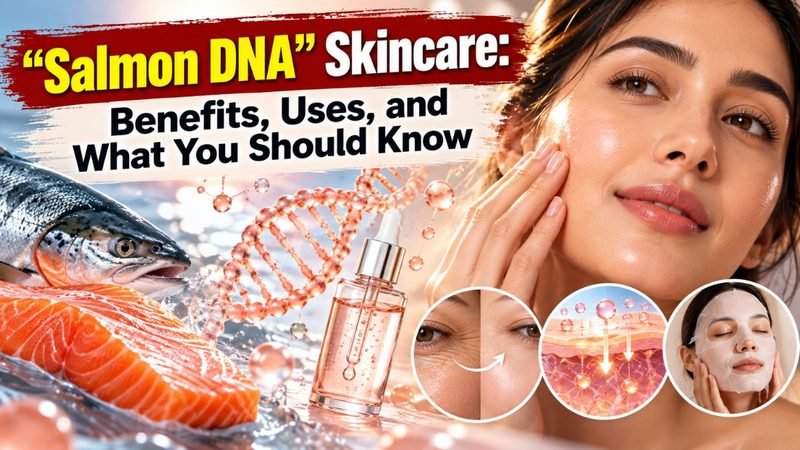
Skincare trends come and go, but some ingredients quickly become the center of attention because of their unusual origins and promising skin benefits. One of the latest names making waves in the beauty world is PDRN, often referred to as “Salmon DNA” skincare. From serums and creams to professional skin treatments, PDRN is increasingly being discussed for its potential role in supporting smoother, healthier-looking skin. But what exactly is it, how is it used, and is it really worth adding to your skincare routine? Here is a quick review of what you should know before trying this trending ingredient.
What Exactly Is “Salmon DNA” Skincare?
“Salmon DNA” is a popular beauty-industry nickname for PDRN, or polydeoxyribonucleotide. PDRN consists of DNA fragments that have traditionally been sourced from salmon or trout tissues and processed for cosmetic or medical applications. The term may sound unusual, but the skincare concept is less about putting raw salmon DNA on the face and more about using purified ingredients formulated to support the skin. Depending on the product, PDRN may appear in serums, creams, masks, or professional treatments. Its growing popularity comes from interest in skin regeneration and improving the overall appearance and texture of the skin.
Why Has PDRN Become So Popular?
The sudden popularity of PDRN is closely connected to the growing demand for skin-repair and rejuvenation-focused skincare. Consumers are increasingly interested in ingredients that do more than simply moisturize the surface. PDRN has gained attention because it is associated with skin recovery and tissue-support processes. It has also become particularly popular in Korean beauty and aesthetic skincare circles, where the focus is often on achieving hydrated, smooth, naturally radiant-looking skin. Social media has further pushed the ingredient into the spotlight, making “Salmon DNA” one of the more recognizable emerging skincare trends.
How Could PDRN Benefit the Skin?
One of the main reasons people are interested in PDRN is its potential to support skin regeneration and repair. Research into PDRN has explored its effects on cellular activity, wound healing, and tissue recovery. In cosmetic skincare, this has translated into interest in benefits such as improved-looking texture, hydration, elasticity, and overall skin quality. However, results can vary significantly depending on the concentration, formulation, delivery method, and individual skin condition. A PDRN serum used at home should not automatically be expected to produce the same results as a professionally administered treatment.
PDRN May Support a More Hydrated, Plumper Appearance
Dryness and dehydration can make skin look dull, rough, and tired. PDRN products are often formulated alongside moisturizing ingredients, which can help the skin appear softer, smoother, and more hydrated. Some people use PDRN-based products as part of a routine designed to improve the appearance of fine lines and loss of firmness. It is important to remember, though, that the visible hydration effect may come from the overall formulation rather than PDRN alone. Ingredients such as hyaluronic acid, glycerin, ceramides, and peptides may also contribute to the skin’s appearance.
Can PDRN Help With Fine Lines and Skin Texture?
Another major attraction of “Salmon DNA” skincare is its connection with skin texture and signs of aging. As skin naturally changes with age, collagen and elastin production can decline, while environmental exposure can contribute to visible fine lines and uneven texture. PDRN is being investigated for its role in supporting biological processes involved in tissue repair. In cosmetic products, this has led to claims surrounding smoother-looking skin and improved firmness. However, PDRN should be viewed as one part of an anti-aging routine rather than a miracle ingredient that can erase wrinkles overnight.
What Types of PDRN Products Are Available?
Today, PDRN can be found in several different types of skincare products. Serums and ampoules are among the most common because they are designed to deliver concentrated active ingredients. Creams and moisturizers containing PDRN are also available and can be incorporated into a regular nighttime or daytime routine. There are also sheet masks and professional aesthetic procedures featuring PDRN or related formulations. Before buying a product, check the complete ingredient list rather than relying only on the words “Salmon DNA” printed prominently on the packaging. The supporting ingredients and overall formulation can make a significant difference.
How Should Beginners Add PDRN to Their Routine?
If you are new to PDRN, starting with a simple topical product can be a practical approach. Apply it according to the manufacturer’s directions, usually after cleansing and before moisturizer. During the first few uses, avoid introducing several other new active ingredients at the same time. This makes it easier to identify what your skin tolerates and reduces the chance of unnecessary irritation. PDRN does not replace basic skincare essentials. A gentle cleanser, moisturizer, and broad-spectrum sunscreen should remain the foundation of a daily routine, while PDRN can be considered an additional step.
Is PDRN Suitable for Every Skin Type?
There is no single skincare ingredient that works identically for everyone. PDRN products may be appealing to people concerned about dryness, dullness, texture, or visible signs of aging, but individual responses can differ. People with sensitive or reactive skin should introduce any new product gradually and consider patch testing first. It is also worth checking the rest of the formula because fragrances, preservatives, or other active ingredients may be responsible for irritation rather than PDRN itself. If you have a persistent skin condition or are undergoing professional skin treatment, discussing new active products with a qualified dermatologist can be helpful.
What About Professional PDRN Treatments?
The term “PDRN” is also used in professional aesthetic settings, where treatments may involve techniques designed to deliver ingredients more directly into the skin. These procedures are very different from applying a PDRN serum at home. Professional treatments may involve needles or other delivery techniques and should only be performed by appropriately qualified medical professionals. They can also involve risks, downtime, and additional costs. Importantly, the evidence and expected results can differ depending on the specific procedure and formulation. Anyone considering an injectable or clinic-based treatment should seek professional advice rather than treating online beauty trends as medical recommendations.
Is “Salmon DNA” Skincare Worth Trying?
PDRN is certainly an interesting ingredient, but it is best approached with realistic expectations. Its growing popularity is supported by scientific interest in PDRN’s potential role in tissue repair and skin-related processes, while cosmetic products vary widely in formulation and quality. If you want to experiment with the trend, a well-formulated topical product from a reputable brand may be a reasonable addition to an established skincare routine. However, there is no need to completely replace proven basics such as sunscreen, moisturizers, and gentle cleansing. Ultimately, “Salmon DNA” skincare is better viewed as an emerging ingredient worth understanding rather than a magical shortcut to perfect skin.
Final Takeaway
The “Salmon DNA” skincare trend may have an unusual name, but the science behind PDRN is more interesting than the marketing phrase suggests. PDRN has been studied for its potential involvement in tissue repair and cellular processes, which explains why it has attracted attention in both medical and cosmetic fields. For skincare users, the biggest potential appeal is its role in routines focused on hydration, skin texture, recovery, and a healthier-looking complexion. Still, product formulations differ, research on cosmetic applications continues to develop, and dramatic claims should be treated carefully. If you decide to try PDRN, start slowly, choose products from reputable sources, and keep the fundamentals of good skincare—especially daily sun protection—at the center of your routine.