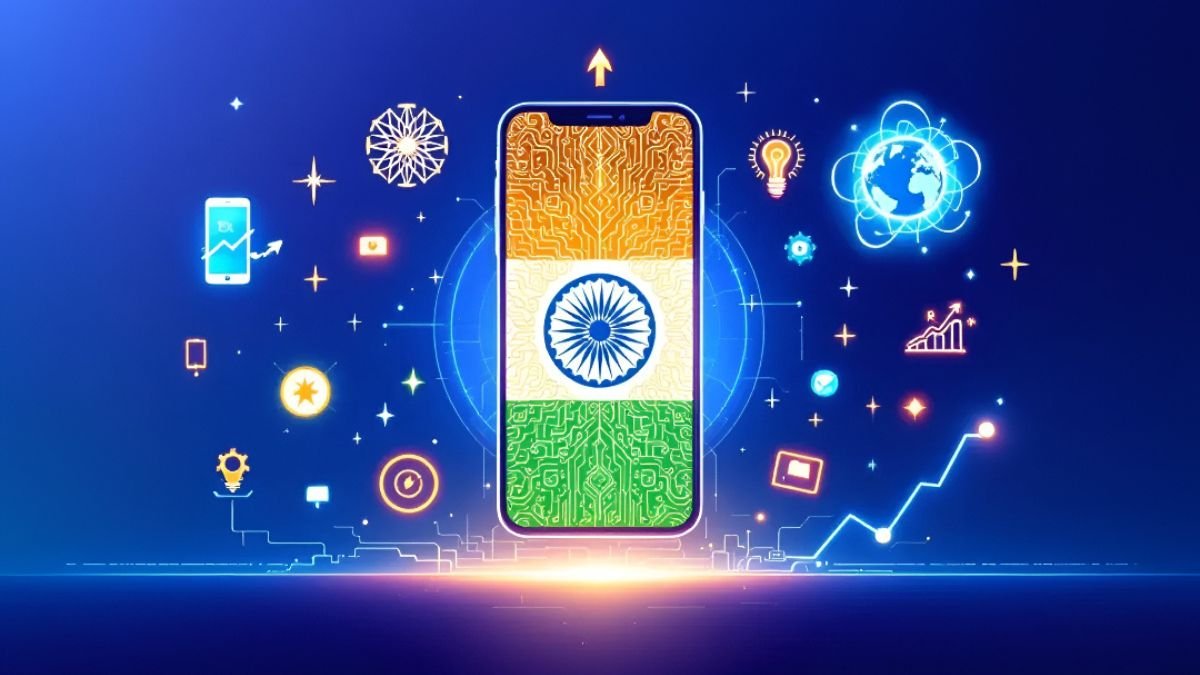
In today’s digital world, proving one’s identity has become easier and faster than ever before. While we previously had to carry various cards and documents in our wallets for almost every task, digital IDs are now simplifying this process. A digital ID means you can securely store your identity credentials on your mobile device and access them instantly whenever needed.
Digital IDs are expanding rapidly in many countries around the world, including India. This is not only enhancing convenience but also elevating security and privacy to a whole new level.
The Need for a Secure and Privacy-Focused System
A digital ID can only become truly useful if it is completely secure, private, and universally interoperable. To this end, tech companies and governments are collaborating to develop systems based on global standards.
This involves the use of technologies such as “selective disclosure.” This means that whenever you need to prove your identity, you do not have to share your entire personal profile. You share only the specific information required at that moment—such as your age or name—thereby keeping your private data secure.

The Expansion of Digital IDs in India
In India, a major stride toward digital identity has been taken through a partnership with UIDAI. Consumers can now securely save their verifiable Aadhaar credentials directly to Google Wallet.
This feature offers a “digital-first” ID experience, making everyday tasks significantly easier. There is no longer a need to repeatedly present a physical card to prove one’s identity.
Applications in Everyday Life
The utility of a digital ID extends far beyond merely displaying one’s identity; it also makes various services faster and more secure:
- At PVR INOX, you can easily verify your age and redeem rewards.
- On BharatMatrimony, verified profiles facilitate finding trustworthy matches.
- With Atlys, auto-filling international visa applications becomes effortless.
- MyGate will soon assist in the secure verification of delivery personnel and service staff.
- Confidence regarding the identity of service providers on platforms like Snabbit is set to increase.
It is evident from all these examples that a digital ID is not merely a technology but a tool that simplifies and secures everyday life.
Global Expansion
Beyond India, the adoption of digital IDs is expanding rapidly in other countries as well. Through Google Wallet, people in nations such as Singapore, Taiwan, and Brazil can now create passport-based digital IDs.
This digital ID functions as an “ID Pass,” enabling individuals to easily verify their identity in both online and offline environments. For instance, tasks such as logging into an account or verifying one’s age have become simpler than ever before.
Interoperability and Future Prospects
“Interoperability” is a crucial aspect of the evolution of digital IDs. This implies that your digital identity should function seamlessly across various platforms and services. This capability could prove to be a significant step toward the realization of a universal digital identity in the future.
As technology continues to evolve, digital IDs will become even smarter, more secure, and more comprehensive. This will not only enhance personal usage but also bring about transformative changes in the realms of business and governance.

Conclusion
The expansion of digital IDs represents not merely a technological shift but the dawn of a new digital lifestyle. India is making rapid strides in this domain, and other nations across the globe are also moving in this direction.
Striking a balance between security, privacy, and convenience, digital identity is poised to become an integral part of the future. In the times to come, it will not only simplify the process of establishing our identity but also reinforce trust and transparency within the digital world.
FAQs
Q. What is a digital ID?
A. A digital ID is an electronic version of your identity documents that can be stored and used on your smartphone.
Q. How is Aadhaar used as a digital ID in India?
A. Aadhaar can be saved in apps like Google Wallet as a verifiable credential for secure identity verification.
Q. Is digital ID safe to use?
A. Yes, it uses advanced security features like encryption and selective data sharing to protect your information.
Q. What is selective disclosure in digital IDs?
A. It allows you to share only the necessary details (like age or name) instead of your full identity.
Q. Which countries are adopting digital IDs?
A. Countries like India, Singapore, Brazil, and Taiwan are actively expanding digital ID systems.