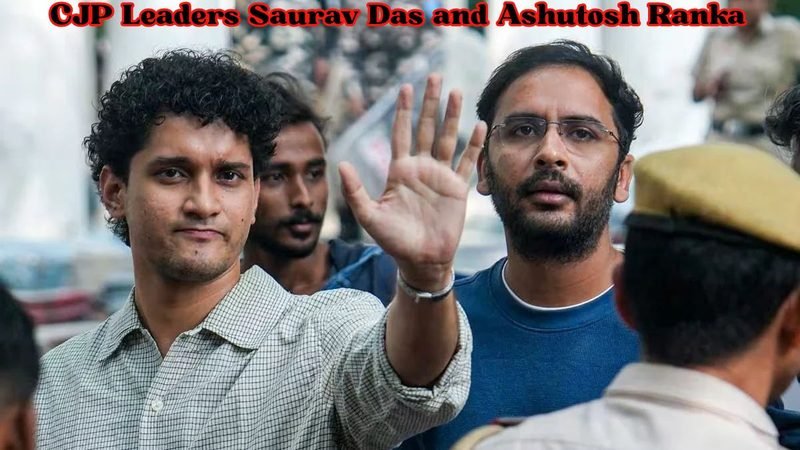
Reports indicate that Citizen Justice Party (CJP) leaders Saurav Das and Ashutosh Ranka have been remanded to five days of judicial custody in connection with a case involving alleged encroachment. According to available information, this order was issued by the Special Executive Magistrate.
This development has brought the matter into the spotlight. The decision to remand both leaders to judicial custody is considered significant regarding the legal proceedings of the case. However, a complete picture of the events will only emerge once detailed information regarding the background of the case, the location of the alleged incident, and the evidence presented in court becomes available.
Sourav Das and Ashutosh Ranka are currently in the spotlight.
Sourav Das and Ashutosh Ranka are the key figures in this matter; both are identified as CJP leaders. Legal actions against individuals associated with political or social organizations naturally draw public attention. The order for five days of judicial custody is a significant development in this instance. However, the available reports do not mention the stance taken by the two leaders regarding the matter. Therefore, it is essential to await official information and statements from the concerned parties before drawing any conclusions or making comments on the case.
The Matter Relates to a Protest at Jantar Mantar
According to media reports, the case stems from a protest held by CJP leaders and activists at Delhi’s Jantar Mantar. The police allege that the protesters breached the designated barricades and entered an area that was not notified as a designated site for protests. Police action followed this incident. It would be inappropriate to view this matter solely through the lens of encroachment allegations, as underlying issues—such as protest permissions, public order, and the right to protest—are also involved.
Protest Demanding the Chief Election Commissioner’s Resignation
According to reports, a primary objective of the CJP’s protest was to demand the resignation of Chief Election Commissioner Gyanesh Kumar. The party and certain opposition groups have raised questions regarding alleged irregularities in the Special Intensive Revision (SIR) process of the electoral rolls.
While the protesters’ demands and allegations form part of the political discourse, the perspective of the concerned institutions is also significant. The events at Jantar Mantar have once again intensified the debate surrounding the electoral process, democratic dissent, and administrative restrictions.
Delhi Police Registers a Case
Following these events, the Delhi Police registered a case against CJP leaders. Media reports indicate that the allegations include unauthorized entry, violation of prohibitory orders, breach of conditions of a bond executed to maintain peace, and obstructing a public servant from discharging their duties. The appropriate judicial process will determine the gravity and legal standing of these allegations. It is important to clarify that the charges leveled by the police do not, in themselves, constitute proof of guilt. The arguments of the concerned parties and the available evidence will also play a crucial role in the matter.
Leaders Previously Detained
According to media reports, Saurav Das and Ashutosh Ranka had previously been detained in connection with a protest in Delhi. At that time, they were released after executing a bond to maintain peace. Officials stated that the bond was valid for a period of one year. In the current instance, the police have also alleged a violation of the bond’s conditions.
Consequently, the link between the previous action and the current developments has become a subject of discussion. However, a proper understanding of the legal process and relevant documents is essential before drawing any final conclusions regarding whether the bond conditions were indeed violated.
Administration’s Decision Regarding Jantar Mantar
Against this backdrop, the administration’s decision concerning protest sites in Delhi is also a significant factor. According to reports, after removing Jantar Mantar from the list of designated protest sites, the Delhi Police had earmarked Ramlila Maidan, Burari Ground, and CBD Ground as the designated locations for protests.
The administration designates specific sites and enforces rules for protests to maintain public order. On the other hand, the CJP has objected to the restrictions imposed on protests at Jantar Mantar. Striking a balance between administrative regulations and the freedom to stage peaceful protests has emerged as a key issue in this dispute.
Appearance Before the Special Executive Magistrate
Following the police action, Saurav Das and Ashutosh Ranka were produced before the Special Executive Magistrate in Delhi. According to reports, an order was issued on Wednesday, October 14, 2026, remanding both leaders to judicial custody for five days. Judicial custody implies that the individual is held in detention under a court order. This order marks a significant stage in the legal proceedings of the case. The charges, police arguments, and the defense’s contentions will play a crucial role in the subsequent proceedings.
Defense Raises Questions About Police Action
The defense has also questioned the police’s actions in this matter. According to media reports, the lawyer representing the leaders objected to the police’s claims in court. Individuals associated with the CJP have also criticized the action taken. In such cases, it is essential to understand the statements from both the police and the defense separately, as each side may present the sequence of events from its own perspective. The actual situation should be assessed based on the facts presented in court, available evidence, and applicable legal provisions. For now, the order for judicial custody does not equate to a finding of guilt regarding the charges against the two leaders.
Focus Shifts to Further Legal Proceedings
Following the remand of Sourav Das and Ashutosh Ranka to five days of judicial custody, attention now turns to the next steps in the legal proceedings. This case involves issues regarding regulations for protests in public spaces and alleged violations while also raising questions about political dissent and the right to democratic expression.
As the process moves forward, it will be crucial to see how the police’s allegations and the defense’s arguments are weighed. Furthermore, one should await the completion of the judicial process before drawing any final conclusions. Based on current reports, it can be said that the dispute—which began with a protest at Jantar Mantar—has garnered significant attention due to the detention of CJP leaders and the administrative action taken.