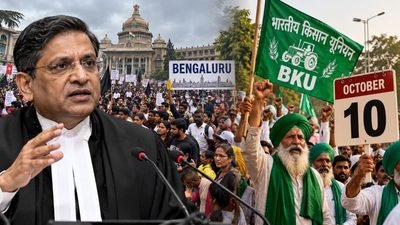
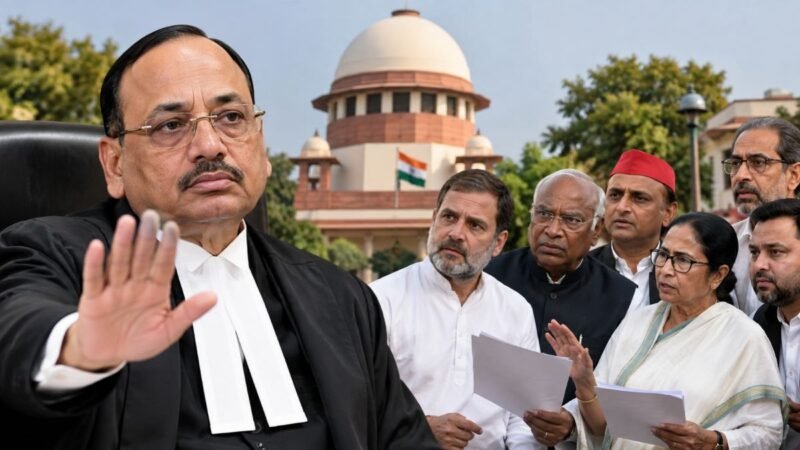
Reports that Chief Justice of India (CJI) Surya Kant declined a meeting with INDIA bloc leaders on October 12 have sparked discussion in political and judicial circles. The proposed meeting’s purpose and the Chief Justice’s refusal have drawn attention. However, understanding the circumstances requires considering official information and statements from the concerned parties. It is crucial to verify facts before drawing conclusions regarding interactions between the judiciary and political parties.
Focus on the Proposed Meeting with INDIA Bloc Leaders
The INDIA bloc is a coalition of opposition parties that frequently voices its views and concerns on various political issues. Naturally, news of a proposed meeting between the coalition’s leaders and the Chief Justice of India has become a topic of political discussion. However, details regarding the meeting’s agenda, the participating leaders, and the context of the formal request can only be clarified through official accounts. At this stage, it would be premature to conclude that a political dispute or confrontation exists based solely on the refusal to meet.
Why Did the Chief Justice Decline the Meeting?
The most significant aspect of this development is the reason behind CJI Surya Kant’s refusal to meet the INDIA bloc leaders. While reports indicate that reasons were cited for the decision, detailed information regarding them is not currently available. Therefore, it would be incorrect to attribute the decision to any specific political issue, judicial process, or other controversy. The situation can only be fully understood once the Chief Justice’s actual stance, official statements, and documents related to the meeting are made public. Distinguishing between facts and speculation in news reporting is essential for democratic discourse.
The Importance of Balance Between the Judiciary and Politics
In India, the independence and impartiality of the judiciary are vital pillars of the democratic system. We view any developments involving the Chief Justice and political parties within this broader context. It is natural for the decisions and public activities of individuals holding judicial office to be discussed, but such discussions must be grounded in facts. The mere occurrence—or non-occurrence—of a meeting does not, in itself, prove the correctness or incorrectness of any party’s position. In such matters, it is essential to understand institutional decorum, transparency, and constitutional responsibilities.
What lies ahead?
The situation regarding the news involving CJI Surya Kant and leaders of the INDIA bloc may become clearer through official clarifications and credible news reports. If further information emerges concerning requests for a meeting, its purpose, or the reasons for a refusal, it will aid in a deeper understanding of these events. For now, the most important thing for readers is to rely on verified facts rather than unconfirmed claims or speculation circulating on social media. The significance of any new information regarding this matter should be assessed based on its source, context, and official confirmation.
Impartial Information: The Foundation of News
The developments involving CJP Surya Kant and leaders of the INDIA bloc offer an opportunity to discuss the relationship between the judiciary and political institutions. However, drawing any concrete conclusions on this matter requires sufficient and verified information. Presenting news in a balanced manner entails giving due weight to all available facts and avoiding the formation of assumptions about any party without evidence. As credible information regarding this matter emerges, readers will gain a better understanding of its various aspects.
Conclusion
CJI Surya Kant’s decision not to meet with INDIA bloc leaders on October 12 has become a subject of discussion. However, to grasp the full picture of these events, it is necessary to confirm the purpose of the meeting and the actual reasons cited for the refusal. Impartial reporting on sensitive news involving the judiciary and politics is possible only when facts are presented without exaggeration or unverified conclusions.