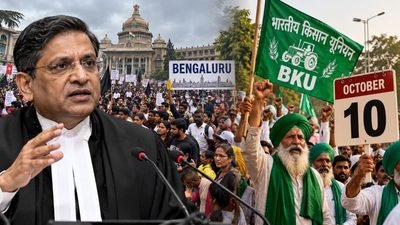
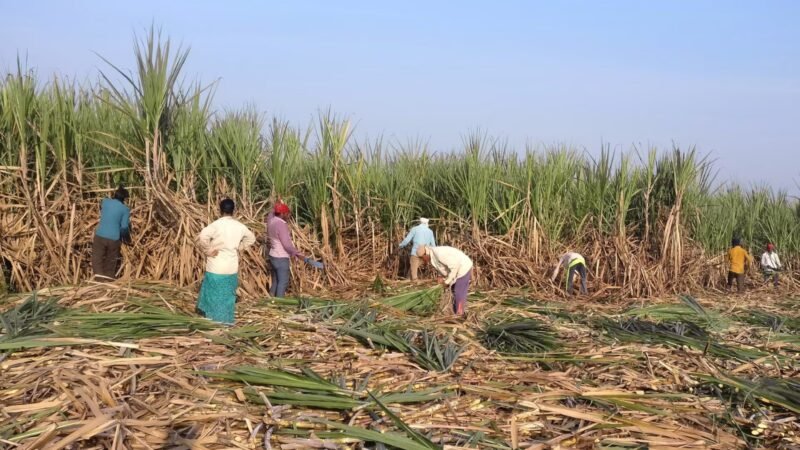
The sugarcane farmers’ agitation has intensified in Maharashtra and Karnataka. Following a meeting between Union ministers and farmer representatives in Delhi on October 12, 2026, which failed to reach a concrete agreement on their demands, farmers’ organizations have announced a nationwide highway blockade starting October 13th.
At the heart of this sugar industry crisis are issues such as fair prices for sugarcane, the minimum selling price of sugar, the price of ethanol, and potential losses from the early start of sugarcane crushing. Farmer organizations say that mere meetings and assurances are not enough; they need decisions that will reduce the growing gap between farming costs and income. However, the actual situation of the movement may vary in different areas, so travelers should check the latest information from local administrations and traffic departments.
Sugar Industry Crisis: Why did the controversy escalate after the meeting in Delhi remained inconclusive?
A meeting was held in Delhi in the presence of Union Agriculture Minister Shivraj Singh Chouhan and Union Food and Consumer Affairs Minister Pralhad Joshi to discuss the demands of sugarcane farmers. Farmer representatives from Maharashtra and Karnataka hoped that the discussions would lead to concrete solutions regarding sugarcane prices, sugar sales prices, and potential losses from early crushing. But according to farmer leaders, the meeting failed to reach a final agreement on their key demands. Following this, farmer leaders, including Raju Shetty, president of the Swabhimani Shetkari Sanghatana, have vowed to intensify their agitation. They argue that the cost of fertilizers, labor, transportation, and other inputs in agriculture is rising, so the prices farmers receive should also be in line with economic realities.
Following the meeting, the central government announced the formation of a high-level joint committee. According to an All India Radio report, the committee is to be formed within a week and is planned to include representatives from the central and state governments, farmers’ organizations, sugar mills, and experts. The committee will review technical issues such as sugarcane crushing timing, recovery data, weighing procedures, and laboratory testing. However, farmer organizations are angry, demanding immediate relief and a clear timeline. They believe that there is no reason to call off the agitation until a concrete decision is reached on their demands.
Road blockade announced in Maharashtra and Karnataka: Which areas may be affected?
Raju Shetty has announced a blockade of national highways in parts of Maharashtra and Karnataka from October 13. The agitation is planned near the Koganolli toll post on the Pune-Bengaluru National Highway in Maharashtra, reports the Times of India. Additionally, protests have been called for on highways in Karad, Satara, and Indapur in western Maharashtra, and in the Parbhani and Nanded regions of Marathwada. In Karnataka, protests have been announced on major roads in Hubli, Gadag, and Hattarki. Farmers’ organizations have also warned of an indefinite protest.
However, announcing a protest and confirming that traffic will actually be blocked on a road are two different things. It would be inaccurate to assume that all mentioned routes will be blocked simultaneously or throughout the day. Passengers, freight vehicle drivers, and bus operators should check with local police, district administration, and highway officials for information before their departure. Travelers crossing the Maharashtra-Karnataka border, in particular, will find it helpful to plan for alternative routes and allow extra time. It is not appropriate to declare a particular route completely closed without confirming the latest situation.
What are the main demands of sugarcane farmers?
Issues facing the sugar industry are not limited merely to raising sugarcane prices. Farmers’ organizations seek an economic balance between sugarcane production, sugar sales, and ethanol revenue that protects both farmers and mills from financial loss. According to reports following the meeting, farmer leaders put forward demands such as raising the minimum selling price of sugar to ₹50 per kilogram, increasing the ethanol procurement price to ₹70 per liter, and providing compensation of ₹500 per tonne for potential losses incurred due to early crushing. These are demands made by farmer leaders, not rates approved by the government.
Additionally, some farmer organizations have demanded a price of up to ₹5,000 per tonne for sugarcane. It is important to distinguish between the various demands: the sugarcane price is the amount a farmer receives for their crop, whereas the minimum selling price of sugar is the rate at which mills sell sugar. The procurement price of ethanol is a separate matter that can influence the revenue of sugar mills and the options for sugarcane utilization. Farmer leaders argue that without an improvement in earnings from sugar and ethanol, the pressure on mills to pay farmers more could intensify; therefore, they are demanding that these issues be addressed concurrently.
Farmers’ concerns regarding early sugarcane crushing
A significant reason for this sugar industry crisis is the disagreement regarding the early commencement of the crushing season. The government has emphasized the need for mills to start operations early to ensure sugar availability during the festive season. On the other hand, farmers’ organizations argue that if sugarcane harvesting and crushing begin before the crop has fully matured, sugar recovery could decline. ‘Recovery’ refers to the proportion of sugar obtained from the sugarcane. If a smaller quantity of sugar is extracted from the same amount of cane, it could impact the mill’s revenue and raise questions concerning the payments made to farmers.
In an *Economic Times* report dated October 7, Raju Shetti claimed that crushing immature sugarcane could result in a yield loss of up to six tonnes per acre and a financial loss of approximately ₹20,000 for farmers. This should be viewed as a claim made by a farmer leader rather than a verified loss applicable to every farmer or field. The actual impact would depend on factors such as weather, sugarcane variety, field conditions, the timing of the harvest, and the mill’s recovery rate. Farmers demand that agricultural conditions and potential losses be taken into account when determining the crushing schedule.
How is the dispute over sugar prices linked to the FRP?
The FRP—or Fair and Remunerative Price—plays a significant role in the issue of payments to sugarcane farmers. This is the fair and remunerative price for sugarcane determined by the Central Government. Additionally, some states consider a State Advised Price or other arrangements based on their specific circumstances. Farmer leaders argue that the payments they receive are inadequate, despite rising cultivation costs. They contend that unless there is an expected improvement in sugar sale prices and revenue from ethanol, it may become difficult for sugar mills to manage increased costs and offer better payments to farmers.
After the meeting, Raju Shetty also stated that sugar mills are facing financial pressure because the minimum selling price of sugar has not been raised for a long time. That is their perspective; however, to assess the actual state of the industry, it is essential to examine data regarding mill costs, market prices, stock levels, production, and government policies collectively. Resolving this issue lies not merely in altering a single rate, but in striking a balance between farmers’ income, the financial viability of the mills, and the availability of sugar in the country.
What steps has the central government taken?
The Central Government has announced the formation of a high-level joint committee to examine and resolve farmers’ grievances. According to All India Radio, the committee is set to include representatives from the Central Government, the state governments of Maharashtra and Karnataka, farmers’ organizations, sugar mills, and expert scientists. The committee will investigate issues such as discrepancies in sugarcane recovery data, weighing procedures, laboratory testing, crop insurance, and the timing of crushing operations. Its objective is to understand the farmers’ grievances on a technical basis and provide recommendations to the government for further action.
However, the announcement to constitute a committee cannot be construed as an acceptance of all the farmers’ demands. Separate policy decisions may be required regarding sugarcane prices, the minimum selling price of sugar, and ethanol procurement rates. The crucial questions now are how soon the committee begins its work, what recommendations it makes concerning the farmers’ grievances, and how long the government takes to make a decision on them. Until these questions are answered, the likelihood of both the agitation and the dialogue continuing will remain.
What impact could the farmers’ protest have on the general public and businesses?
If the announced road blockade disrupts traffic on major highways, it could impact travelers, buses, trucks, and the transportation of agricultural produce. Freight vehicles operating between Maharashtra and Karnataka may face delays, while local businesses and daily commuters might need to seek alternative routes. However, the actual impact will depend on the specific locations of the protests, the duration of the blockades, and how the administration manages traffic.
The dispute within the sugar industry is not limited to farmers and mills alone; the processes of sugarcane harvesting, transportation to mills, crushing, sugar supply, and ethanol production are all interconnected. Prolonged disruptions in production or transportation can place strain on the associated businesses. At the same time, addressing farmers’ demands is crucial, as the rural economy suffers when the gap between cultivation costs and crop income widens. Therefore, any sustainable solution must take into account three factors: fair income for farmers, the financial health of the mills, and the availability of sugar for consumers.
What happens next? Hopes for a resolution between farmers and the government.
Following the ‘chakka jam’ (road blockade) protest announced for October 13, all eyes are now on the committee proposed by the Central Government and the future strategy of the farmers’ organizations. Farmers are seeking clear decisions on issues related to sugarcane payments and the pricing of sugar and ethanol. The challenge before the government is to address the farmers’ grievances while simultaneously ensuring sugar availability and the economic stability of the industry. If the talks yield time-bound decisions, the situation regarding the protest could change; however, as of now, there is no confirmation of any agreement or the calling off of the protest.
Overall, the sugar industry crisis involves a complex set of issues affecting sugarcane farmers’ incomes, sugar mill operating costs, and the timing of the crushing season in Maharashtra and Karnataka. Following a lack of consensus at a meeting in Delhi, protests on highways have been announced, while the Centre has proposed forming a committee to review the grievances. The crucial next step will be to see what practical solutions are actually delivered to the farmers beyond these announcements. Travelers should keep themselves updated on road conditions, and readers should rely on confirmations from the local administration regarding the actual status of the protests.