
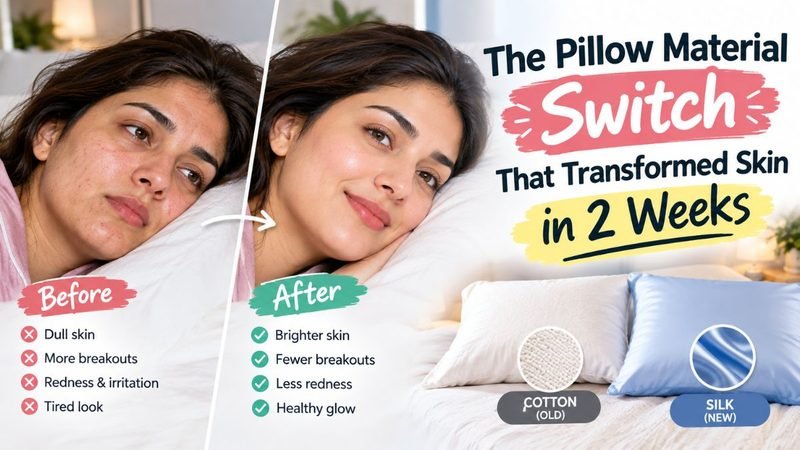
We spend roughly a third of our lives sleeping, yet most people pay far more attention to their daytime skincare routine than to what their face touches for several hours every night. Your cleanser, moisturiser, and serum may all be carefully chosen, but there is one everyday item that often gets overlooked: your pillowcase. Recently, the idea of switching pillowcase materials has attracted attention among skincare enthusiasts and dermatologists because the fabric touching your face night after night can influence friction, moisture, heat, and how much product remains on your skin. While changing a pillowcase material is not a miracle treatment and cannot transform every person’s skin in exactly two weeks, making a smarter fabric choice may help create a cleaner, gentler sleeping environment for your skin.
Why Your Pillowcase Matters More Than You Think
Your pillowcase stays in close contact with your face for hours while you sleep. During that time, it can collect sweat, oil, dead skin cells, hair products, skincare residue, and other everyday debris. If the material creates a lot of friction against your skin, it may also contribute to morning creases and irritation, especially for people with sensitive skin. This does not mean that a normal cotton pillowcase is automatically bad. Cotton is breathable, comfortable, affordable, and widely used for good reason. However, the texture and weave of different fabrics can feel very different against the skin. For someone who wakes up with irritated cheeks, tangled hair, or a noticeably dry face, changing the pillowcase may be a simple experiment worth trying.
The Big Difference Is Often Friction
One of the most discussed reasons for choosing smoother pillowcase materials is friction. Rougher fabrics can drag against the skin as you move your head during the night. A smoother surface allows your face to move more easily across the pillow, potentially reducing mechanical irritation. This can be particularly appealing if your skin becomes easily irritated or you notice temporary sleep lines in the morning. Silk and satin pillowcases are popular because they generally provide a smoother surface than many traditional cotton fabrics. However, the exact feel depends on the specific fabric, weave, and quality, so the label alone does not tell the whole story.
Silk and Satin Are Not the Same Thing
People often use the terms ‘silk’ and ‘satin’ as though they mean the same material, but they do not. Silk is a natural fibre produced by silkworms, while ‘satin’ describes a type of weave that can be made using different fibres, including polyester. Both can create a smooth sleeping surface, but their breathability, texture, durability, care requirements, and price can differ considerably. High-quality silk may feel exceptionally soft and luxurious, while satin can provide a similar slippery texture at a lower price. If your main goal is reducing friction, you do not necessarily need to spend a fortune on silk. A well-made smooth pillowcase that feels comfortable and can be washed regularly may be a practical alternative.
Less Friction May Mean Less Morning Irritation
For some people, the biggest noticeable difference after switching pillowcase materials is simply waking up with skin that feels less irritated. Constant rubbing is not usually the main cause of common skin problems, but reducing unnecessary mechanical irritation can make sense as part of a gentle skincare approach. This may be especially useful for people who already use active ingredients such as exfoliating acids or retinoids, which can sometimes leave skin more sensitive. A smoother pillow surface may not cure redness or acne, but it can remove one possible source of nightly friction from your routine. Think of it as creating a more skin-friendly environment rather than treating a specific condition.Disclaimer
What About Moisture and Skincare Products?
Another reason smoother fabrics attract attention is their relationship with moisture. Some fabrics may absorb more of the skincare products, sweat, and natural oils that come into contact with them. This does not mean that a particular pillowcase will keep every drop of moisturiser on your face. Skincare absorption is much more complicated than simply blaming fabric. Still, if you apply a moisturiser before bed and notice that your skin feels dry by morning, a less absorbent, smoother pillowcase may be worth testing. The bigger lesson is that nighttime skincare works best when combined with reasonable sleep hygiene, clean bedding, and a moisturiser suited to your skin type.
Cleanliness Still Matters More Than the Fabric Label
A luxurious pillowcase will not help much if it is rarely washed. Pillowcases collect oil, sweat, dead skin cells, hair products, and skincare residue regardless of whether they are made from cotton, silk, or satin. That is why regular washing is arguably more important than simply choosing a trendy material. If you are prone to breakouts or have oily skin, keeping pillowcases clean can be a useful part of your overall routine. It can also help to avoid going to bed with heavy hair products that can transfer onto your face. In other words, switching materials is only one piece of the puzzle; basic hygiene should come first.
Your Skin Type Should Guide the Experiment
There is no single pillowcase material that is perfect for everyone. If your skin is sensitive, you may prefer a smooth fabric that does not feel scratchy or rough. If you tend to feel hot while sleeping, breathability may be more important than having the smoothest possible surface. If you have oily or acne-prone skin, easy washing and good hygiene may be your biggest priorities. People with dry skin may focus more on minimising irritation and maintaining a comfortable nighttime environment. Instead of following a universal rule, treat the pillowcase switch as a small personal experiment and pay attention to how your skin responds.
Hair Benefits Are an Added Bonus
The pillowcase conversation is not only about skin. Smooth materials are also popular among people who want to reduce overnight hair friction. Rougher surfaces can contribute to tangling and frizz, particularly for curly, textured, or fragile hair. A smoother pillowcase may allow hair to glide rather than catch against the fabric. That can mean less morning frustration when brushing or styling your hair. While the results will vary depending on your hair type and routine, this is one reason some people continue using silk or satin pillowcases even after initially buying them for skincare purposes.
Do Not Expect a Two-Week Miracle
The phrase “transformed skin in two weeks” sounds exciting, but it is important to keep expectations realistic. A pillowcase switch alone is unlikely to dramatically change acne, pigmentation, wrinkles, or other persistent skin concerns within 14 days. Skin health depends on many factors, including genetics, hormones, environment, skincare products, sleep, stress, and overall health. What you may notice in a couple of weeks is subtler: less morning irritation, fewer temporary creases, a more comfortable sleeping experience, or skin that feels calmer. If you see a major improvement, it may also be because changing the pillowcase encouraged you to pay more attention to your entire nighttime routine.
The Best Pillowcase Is the One You Will Actually Maintain
Ultimately, the “best” pillowcase is not necessarily the most expensive one. It is the one that feels comfortable, does not irritate your skin, suits your sleeping temperature, and can be washed frequently without becoming a chore. If you want to try the switch, choose a smooth, breathable option that fits your budget. Wash it regularly, keep hair products away from your face before bed, cleanse your skin gently, and use a moisturiser appropriate for your skin type. Give the change a few weeks rather than expecting overnight results, and compare how your skin feels and looks before and after the switch.
Final Verdict: Is the Pillow Material Switch Worth Trying?
Changing your pillowcase material is a surprisingly simple skincare experiment. It will not replace sunscreen, cleansing, moisturiser, or dermatologist-recommended treatment, and there is no guarantee that it will transform your skin in exactly two weeks. However, choosing a smoother, comfortable, regularly washed pillowcase may reduce friction and make your nighttime environment gentler on your skin and hair. The real takeaway is less about finding a magical fabric and more about recognising that small habits can contribute to a better skincare routine. If your current pillowcase feels rough, leaves your skin irritated, or simply does not work well for you, switching to a smoother material could be an inexpensive change worth testing.